
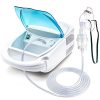
Oxygen Concentrator vs Oxygen Cylinder: Which Is Better?
When a family starts researching home oxygen therapy, one of the first questions that comes up is: oxygen concentrator or oxygen cylinder — which one should we get? The honest answer is that neither option is universally “better.” Which one fits your situation depends on the patient’s prescribed oxygen flow, how long therapy is needed, how reliable your electricity supply is, portability needs, and whether you need backup for emergencies.
This guide compares how each device actually works, what they cost, and where each one tends to make more sense — so you can have an informed conversation with your doctor and supplier rather than guessing.
How They Work
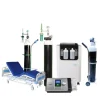
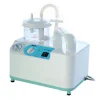
Oxygen Concentrator: draws in room air, separates out the nitrogen, and delivers the remaining concentrated oxygen to the patient continuously, as long as it has power.
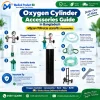
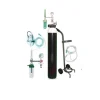
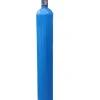
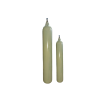
Oxygen Cylinder: stores a fixed supply of already-compressed medical oxygen, which is delivered to the patient through a regulator and flow meter until the stored gas runs out.
In short, a concentrator produces oxygen on demand from the air around it, while a cylinder stores a limited quantity of oxygen that needs to be refilled or replaced once used up.
Portability
Oxygen Cylinder:
- Portable/mini cylinder options are available
- Standard cylinders can be fairly heavy
- A trolley is often needed to move them safely
- Transport and storage safety matter (see our oxygen cylinder safety guide for details)
Oxygen Concentrator:
- Standard home models usually come with wheels, making room-to-room movement relatively easy
- Battery-powered portable models also exist for travel or outings
- Portable concentrator models are generally more expensive than standard home units
Important: “portable” doesn’t mean the same thing for both devices. A standard home concentrator and a dedicated portable oxygen concentrator have quite different mobility, and the same is true for a standard versus a mini oxygen cylinder — don’t assume equivalent portability just because both are labeled “portable.”
Electricity Requirement
Oxygen Concentrator: requires electricity to operate. If the power goes out, the machine stops producing oxygen. Given how common load-shedding can be in parts of Bangladesh, it’s worth considering backup power (like an IPS or generator) and/or a backup oxygen cylinder alongside a concentrator.
Oxygen Cylinder: doesn’t require electricity at all. This is exactly why a cylinder is often kept as backup for emergencies or power outages, even by households that primarily use a concentrator.
Storage
Concentrator:
- Keep it in a dry, clean area
- Ensure adequate ventilation around the machine
- Don’t block the air inlet or outlet
- Protect it appropriately from heat and moisture
Cylinder:
- Keep it upright
- Secure it properly
- Keep it away from heat and fire
- No smoking nearby
- Keep it away from oil and grease
- Ensure adequate ventilation
- Protect the valve
For a full breakdown of cylinder storage and handling, see our dedicated oxygen cylinder safety guide.
Emergency Backup
This is one of the most important parts of the comparison. A concentrator’s key limitation is that it stops working without electricity — so in a power outage, it offers no oxygen supply on its own. A cylinder’s key advantage is that it can deliver oxygen without any electricity at all.
For this reason, many long-term home oxygen setups use a primary source plus a backup source — for example, a concentrator for daily use and a cylinder kept ready for outages or emergencies. That said, this isn’t automatically the right setup for every patient; whether a backup is medically necessary, and what kind, should be discussed with the patient’s doctor or care provider.
Long-Term Use
Concentrator, for long-term continuous therapy:
- Higher initial cost
- No refills needed
- Requires electricity
- Requires maintenance
- Power backup needs to be considered
Cylinder, for long-term use:
- Comparatively lower initial cost
- Refills needed repeatedly
- Delivery/refill logistics to manage
- May need multiple cylinders on hand
- Regulator and accessories required
Cost Consideration
Rather than asking simply “which is cheaper,” it helps to think in terms of total cost of use:
Oxygen Concentrator = Purchase/Rental + Electricity + Maintenance
Oxygen Cylinder = Purchase/Rental + Refills + Delivery + Accessories
How this plays out depends on your situation:
- A few days: consider rental cost for either device
- A few weeks: compare rental vs. purchase for your expected duration
- Several months or years: compare the full total operating cost, not just the upfront price
- Frequent power cuts: factor in the cost of backup power or a backup cylinder
- Emergency use: a ready-to-use cylinder has an advantage since it needs no power
- Continuous prescribed therapy: discuss concentrator suitability directly with your doctor or provider, since flow requirements and duration matter most here
Current Price Reference (Bangladesh)
Oxygen Concentrator: currently priced roughly from ৳35,000 up to ৳1,00,000+ depending on model and capacity, with many 5L models listed in the ৳35,000–৳55,000 range. Premium or high-flow models can cost more.
Oxygen Cylinder:
- China Oxygen Cylinder: around ৳8,000
- Islam Oxygen Cylinder: around ৳9,000
- Linde/BOC Oxygen Cylinder: around ৳16,000
- Refill: starting around ৳800, varying by service and location
Important: these are not fixed market prices — they can change based on model, brand, stock, and market conditions. Please confirm the current price before ordering by calling 01811122698. See Oxygen Concentrator Price in Bangladesh and Oxygen Cylinder Price in Bangladesh for more detail.
Comparison at a Glance
| Factor | Oxygen Concentrator | Oxygen Cylinder |
|---|---|---|
| Oxygen source | Concentrates oxygen from room air | Stores compressed oxygen |
| Electricity | Required | Not required |
| Supply | Continuous, as long as power is available | Limited to the stored gas |
| Refill | Not needed | Needed |
| Portability | Depends on the model | Depends on cylinder size/model |
| Emergency backup | Power-dependent | Power-independent |
| Long-term cost | Electricity + maintenance | Refills + delivery |
| Initial cost | Generally higher | Generally lower |
| Storage | Machine storage requirements | Cylinder safety/storage requirements |
| Best-suited for | Worth considering for long-term/home use | Worth considering for backup, emergency, or short-term use |
There’s intentionally no single “winner” in this table — the right choice depends on the patient’s prescribed flow, therapy duration, electricity reliability, mobility needs, and emergency requirements, which vary from one household to another.
Which One Is Right for You?
A few starting points, not hard rules:
- If oxygen is needed continuously for months or years, and electricity supply is reasonably reliable, a concentrator is often worth discussing with your doctor.
- If oxygen is needed only occasionally, for a short recovery period, or specifically as backup, a cylinder — bought or rented — is often the more practical starting point.
- If both continuous use and power reliability are concerns, many households use both: a concentrator as the primary source and a cylinder as backup.
None of this replaces medical advice — the prescribed flow rate and the choice of device should always be confirmed with the patient’s doctor or healthcare provider.
Available in Dhaka
Medical Product BD supplies both oxygen concentrators and oxygen cylinders across Dhaka — including Mirpur, Mohammadpur, Dhanmondi, Uttara, Gulshan, Banani, and surrounding areas — with sales, rental, refill, and home delivery options, subject to current model and stock availability.
- Browse the Oxygen Concentrator category for 5L, 8L, 10L, and portable models
- Browse the Oxygen Cylinder category for China, Islam, Linde/BOC, and portable cylinders
- See Oxygen Cylinder Rent in Dhaka and Oxygen Cylinder Refill in Dhaka for ongoing cylinder needs
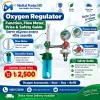
- Check Oxygen Regulator for cylinder accessories
Frequently Asked Questions
1. What is the difference between an oxygen concentrator and an oxygen cylinder? A concentrator produces oxygen continuously from room air using electricity, while a cylinder stores a fixed, refillable supply of compressed medical oxygen that doesn’t need power.
2. Does an oxygen concentrator need electricity? Yes, a concentrator requires electricity to operate, and it stops producing oxygen if the power goes out.
3. Does an oxygen cylinder need electricity? No, a cylinder delivers oxygen without any electricity, which is why it’s often used as backup during power outages.
4. What happens to an oxygen concentrator during load shedding? It stops producing oxygen unless it has a battery backup or is connected to backup power such as an IPS or generator — this is why many households also keep a backup cylinder.
5. Which is better for long-term oxygen therapy? It depends on the patient’s needs — concentrators avoid recurring refills but need reliable electricity and maintenance, while cylinders need repeat refills but work independent of power. Discuss the right fit with your doctor.
6. Which is better for emergency oxygen? A cylinder is generally more practical for emergencies since it doesn’t depend on electricity and can be used immediately.
7. How portable is an oxygen concentrator? Standard home models typically have wheels for room-to-room movement, while dedicated portable, battery-powered models exist for travel — these are usually more expensive than standard units.
8. How portable is an oxygen cylinder? Standard cylinders are fairly heavy and usually need a trolley, though smaller portable/mini cylinders are also available.
9. How much does an oxygen concentrator cost in Bangladesh? Currently roughly ৳35,000 to ৳1,00,000+ depending on model and capacity, with many 5L models around ৳35,000–৳55,000. Prices can change, so confirm before ordering.
10. How much does an oxygen cylinder cost in Bangladesh? Currently around ৳8,000 for China, ৳9,000 for Islam, and ৳16,000 for Linde/BOC, with refills starting around ৳800. Prices can change, so confirm before ordering.
11. Should I keep a backup oxygen cylinder if I already have a concentrator? Many households do, specifically to cover power outages or emergencies, but whether this is necessary for a specific patient should be discussed with their doctor.
12. Can an oxygen concentrator replace an oxygen cylinder, or vice versa? They serve different roles rather than being direct substitutes — a concentrator suits continuous long-term use where power is reliable, while a cylinder suits short-term, emergency, or backup use. Many patients benefit from having access to both.
13. Where can I buy or rent an oxygen concentrator or cylinder in Dhaka? Medical Product BD supplies both, with sales, rental, refill, and home delivery options across Dhaka — call 01811122698 to confirm current models, stock, and pricing.
Not Sure Which Option Fits Your Situation?
Call Medical Product BD at 01811122698 to discuss whether an oxygen concentrator or oxygen cylinder fits your needs. Confirm current price, stock, rental options, and model specifications before ordering.
Medical Product BD | Medical Equipment Shop in Dhaka 📞 Call/WhatsApp: 01811122698 🌐 Website: medicalproductbd.com
Conclusion
There’s no single answer to “which is better” — it depends on the patient’s prescribed oxygen flow, how long therapy will be needed, electricity availability, portability requirements, emergency backup needs, and total cost. A concentrator tends to suit continuous, long-term use where power is reliable; a cylinder tends to suit short-term, emergency, or backup use. Many households end up using both, each covering the other’s limitations.
Talk to your doctor about the prescribed flow rate and expected duration of therapy, and call Medical Product BD at 01811122698 to check current pricing, stock, and rental options for whichever device fits your situation in Dhaka.