
Use of Oxygen Cylinders in Bangladesh: The Complete Safe-Usage Guide for Patients and Caregivers
A cylinder standing beside the bed does nothing by itself — everything depends on the hands operating it. Yet most families receive almost no training before taking one home, which is why the correct use of oxygen cylinders in Bangladesh deserves a full, honest guide of its own. Turn the valve too fast, set the wrong flow, skip the humidifier, or store the cylinder near the kitchen, and a life-saving device becomes ineffective or even dangerous.
At Medical Product BD, our technicians install and demonstrate oxygen setups in Bangladeshi homes every single day. This article distills that hands-on experience into one practical guide: what each component does, the exact operating sequence, how flow rates work, the cleaning routine that prevents infections, and the safety rules that protect your household. Whether you’re a first-time caregiver or refreshing your knowledge, everything you need is below.
Featured Snippet Box
How do you use an oxygen cylinder correctly? To use a medical oxygen cylinder, open the valve slowly by hand, check the pressure gauge for sufficient oxygen, adjust the flow meter to the doctor’s prescribed litres per minute, fill the humidifier bottle with distilled water, then fit the nasal cannula or mask on the patient. Close the valve fully after each session.
Quick Answer
Correct usage follows one sequence every time: valve → gauge → flow rate → humidifier → mask. The flow rate must match the physician’s prescription exactly, the equipment needs regular cleaning to prevent infection, and the cylinder must stay upright, ventilated, and at least three metres from any flame. Training takes minutes; the habit protects a life.
Key Takeaways
- Medical cylinders in Bangladesh contain high-purity oxygen (around 99.5%) — industrial cylinders hold far less pure gas and must never be used for patients.
- Oxygen is used only on a doctor’s advice, typically guided by pulse oximeter readings falling below the patient’s target range.
- The correct operating order is valve, gauge check, flow adjustment, then mask — never the reverse.
- Tubing, masks, and humidifier bottles need regular cleaning; neglected accessories can harbor bacteria and fungi.
- Oxygen strongly supports combustion — keep flames, cigarettes, aerosols, perfumes, and oil-based products well away.
- Professional installation with caregiver training is included free with every Medical Product BD delivery.
What Does “Use of Oxygen Cylinders” Actually Involve?
Using an oxygen cylinder is a complete practice, not a single action. It covers five connected skills:
- Selection — choosing the right cylinder size and grade for the prescription
- Operation — opening, adjusting, and closing the system in the correct order
- Dosing — delivering exactly the litres per minute the doctor prescribed
- Hygiene — cleaning tubing, masks, and humidifier bottles on schedule
- Safety management — storing, positioning, and handling the pressurized cylinder correctly
A caregiver who masters all five turns a steel tank into genuine, reliable respiratory therapy. Miss any one, and the therapy weakens — or turns risky.
Where Oxygen Cylinders Are Used in Bangladesh
Medical use dominates, but it’s worth knowing the full picture. Hospitals and clinics run cylinders for wards, operating theatres, and emergency bays. Home healthcare is the fastest-growing use — COPD, pneumonia, post-COVID, and palliative patients receiving therapy in their own bedrooms. Ambulance services depend on portable cylinders during transfers. Beyond medicine, industrial workshops use lower-purity oxygen for cutting and welding, and divers use specialized breathing cylinders — but those cylinders and gas grades are entirely separate from patient care. The critical rule: only medical-grade cylinders, filled under proper drug licensing, ever touch a patient.
Why Correct Usage Matters So Much
Oxygen behaves like a medicine: the right dose heals, the wrong dose harms. Too little flow leaves the patient under-oxygenated; too much can be harmful for certain patients — particularly those with COPD, whose breathing drive can be disturbed by excessive oxygen. That’s why organizations such as the WHO and NHS consistently frame oxygen as a prescribed therapy, not a household remedy.
Improper handling carries a second danger. Pressurized oxygen dramatically accelerates fire — a cigarette, a mosquito coil, or an oily rag near the valve can turn a bedroom into an emergency. And unclean tubing quietly introduces a third risk: respiratory infections traveling straight into already-weakened lungs. Correct usage neutralizes all three threats at once.
Who Needs to Learn Proper Cylinder Use?
- Primary family caregivers — the spouse, son, or daughter operating the setup daily
- A second trained household member — essential backup for when the main caregiver is away
- Patients themselves, where their condition allows self-management
- Domestic helpers and professional attendants involved in daily care
- Home nursing staff coordinating with the family
- Office and factory first-aid teams maintaining emergency cylinders
- Anyone renting a cylinder short-term — brief use still demands correct use
Signs a Patient May Need Oxygen (and When to Start)
Oxygen begins with a doctor, not a purchase. A physician typically evaluates therapy when a pulse oximeter shows saturation persistently below the patient’s target range (commonly when readings drop into the low 90s or beneath, though targets vary by condition), or when symptoms point the same way: breathlessness at rest or minimal activity, unusually rapid breathing, bluish lips or fingertips, confusion, or heavy fatigue in a diagnosed heart or lung patient.
If these signs appear, the correct sequence is: consult the doctor, obtain the prescribed flow rate, and only then arrange the cylinder. For severe breathing distress, skip everything and seek emergency care immediately.
Know Your Equipment: Anatomy of a Cylinder Setup
Understanding each part makes correct usage intuitive:
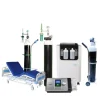
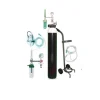
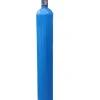
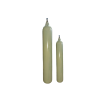
- Cylinder body — steel or aluminium tank holding compressed medical oxygen
- Valve — the master tap on top; opens the gas supply (hand-operated, key/wrench if needed)
- Pressure gauge — shows how much oxygen remains; your fuel indicator
- Regulator — steps the high tank pressure down to a safe, usable level
- Flow meter — the dial or float that sets litres per minute (typically 0–15 L/min)
- Humidifier (bubbler) bottle — bubbles the oxygen through distilled water so it doesn’t dry the airways
- Nasal cannula — two soft prongs for the nostrils; comfortable for low flows
- Oxygen mask — covers nose and mouth; suited to higher flows
- Cylinder key & cap — for valve operation and safe transport
- Trolley or stand — keeps the heavy cylinder upright and mobile
How to Operate an Oxygen Cylinder: The Correct Sequence
Follow this exact order every session:
1. Position and inspect. Cylinder upright in its stand, room ventilated, no flames within three metres. Hands clean and free of oil, cream, or lotion.
2. Open the valve slowly — by hand. Turn gently counter-clockwise. Use the cylinder key only if needed, and never force a stuck valve.
3. Read the pressure gauge. Confirm there’s enough oxygen for the session. A gauge near the red zone means arrange a refill now, not later.
4. Set the flow meter to the prescribed rate. Turn the flow knob until the indicator sits exactly at the doctor’s number — 1, 2, 5 litres per minute, whatever was prescribed. Not more, not less.
5. Check the humidifier bottle. Distilled water between the min and max marks; steady bubbling confirms oxygen is flowing.
6. Fit the cannula or mask. Prongs curving downward into the nostrils, or the mask sealing gently over nose and mouth. The patient should breathe normally.
7. To finish: close the valve first, then zero the flow meter. Closing the valve first lets remaining gas clear the line; then return the flow knob to zero. Recap for any transport.
Print this sequence and tape it near the cylinder — under stress at 2 AM, a checklist beats memory.
Setting the Right Flow Rate
The flow rate is the prescription. A doctor chooses it based on diagnosis, saturation targets, and whether oxygen runs continuously or only during sleep or exertion. Common home prescriptions range from 1–2 L/min for stable chronic patients up to higher flows for acute recovery — but the only correct number is the one on your patient’s prescription.
Two rules protect you here. First, never increase the flow because the patient “seems” breathless — call the doctor instead; the answer might be a different problem entirely. Second, never decrease the flow to stretch a low cylinder — under-dosing endangers the patient; the honest fix is a faster refill. Pair the setup with a pulse oximeter, log readings at consistent times, and let the doctor adjust therapy from real data.
Benefits of Learning Proper Cylinder Usage
- The prescribed therapy actually reaches the patient — correct flow, every session
- Longer cylinder life per fill — no oxygen wasted through open valves or leaks
- Lower infection risk thanks to a proper cleaning routine
- Prevention of oxygen toxicity risks in vulnerable patients like COPD sufferers
- Fire and accident prevention through disciplined storage and handling
- Calm, confident emergencies — a trained caregiver acts, not panics
- Fewer equipment faults — gentle valve handling protects the hardware
- Accurate refill timing from daily gauge reading habits
- Better doctor consultations, backed by logged SpO₂ data
- Comfort for the patient — humidified, correctly fitted oxygen doesn’t hurt
- Money saved on avoidable repairs, wasted gas, and emergency callouts
- Smooth caregiver handovers when a second family member is trained
- Safe coexistence with concentrators in combined setups
- Confidence to travel with portable cylinders when needed
- Protection of the whole household, not just the patient
- Peace of mind — the strongest benefit of all
Features of a Properly Used Oxygen Setup
- Valve opened and closed gently, by hand, in the correct order
- Pressure gauge read and logged every morning
- Flow meter locked to the prescribed litres per minute
- Humidifier bottle filled with distilled water to the correct level
- Cannula or mask fitted correctly and replaced on schedule
- Tubing checked weekly for kinks, cracks, and moisture buildup
- Cylinder upright and secured in a stand or trolley at all times
- Three-metre flame-free zone maintained around the setup
- No perfumes, aerosols, or oil-based products used nearby
- Room ventilation kept open — never a sealed cupboard
- Pulse oximeter readings logged at consistent daily times
- Refill booked at 25% pressure, never at empty
- Backup cylinder ready for continuous-therapy patients
- Two trained operators in the household
- Supplier’s 24/7 number saved and visible near the setup
- Printed operating checklist taped beside the cylinder
Step-by-Step: How We Get You Started
Tell us the prescription. Call, WhatsApp, or order online with the doctor’s flow rate and the patient’s situation; we match the right cylinder, device, and accessories.
Delivery with verification. Our team arrives, shows you the full pressure gauge, and assembles the regulator, flow meter, and humidifier at the bedside.
Live operating demonstration. We walk through the full sequence — valve, gauge, flow, humidifier, mask — with your own hands on the equipment.
Safety walkthrough of your home. We help position the cylinder away from the kitchen and heat sources, and check ventilation and securing.
Caregiver Q&A and printed guide. Every question answered; a simple usage-and-safety sheet stays with you.
Ongoing backup. Refills, accessory replacements, technical doubts at midnight — one number handles it all, 24 hours a day, anywhere in Bangladesh.
Daily and Weekly Care Plan
- Every session: Follow the operating sequence; confirm bubbling in the humidifier; close the valve fully afterward.
- Daily: Read and note the gauge each morning; wipe the mask or cannula; check the patient’s SpO₂ at consistent times.
- Every 2–3 days: Refresh the humidifier’s distilled water completely rather than topping up.
- Weekly: Wash the humidifier bottle thoroughly and air-dry; inspect the full length of tubing; confirm the flow setting still matches the prescription.
- Monthly: Replace cannulas/masks as advised; have the regulator seal checked during your refill visit; review the SpO₂ log with the doctor at follow-up.
- Ongoing: Keep the backup cylinder full, the checklist visible, and the second trained caregiver current.
Safety Rules Every Household Must Follow
- No flames within three metres — stoves, candles, matches, mosquito coils, and cigarettes included.
- No oil, grease, lotion, or petroleum products on hands, valves, or fittings — oxygen turns them into fire hazards.
- No perfumes or aerosol sprays near a running setup.
- Store upright, secured, and ventilated — never lying flat, never in a closed wardrobe, never in direct sun or beside heaters.
- Open valves slowly; never force them. A stuck valve is a service call, not a strength test.
- Leak checks with soapy water only — a lighter test is how accidents begin.
- Cap and secure for any transport, even room to room on stairs.
- Keep children and untrained visitors away from the valve and flow controls.
- Clean tubing and bottles on schedule — neglected accessories can breed bacteria and fungi that infect vulnerable lungs.
- When anything hisses, sticks, or smells odd: close the valve, ventilate, and call professional support immediately.
Common Usage Mistakes in Bangladeshi Homes
- Running the humidifier dry (or with tap water instead of distilled) — causing painful nasal dryness or introducing impurities.
- Adjusting flow by feel. “A little more won’t hurt” is precisely how COPD patients get hurt.
- Leaving the valve open between sessions, silently draining the cylinder overnight.
- Placing the cylinder in the kitchen corridor because space is tight — the single most dangerous shortcut we encounter.
- Reusing cracked tubing and yellowed masks far past their life.
- Only one person knowing how anything works — then traveling.
- Testing connections with a flame. It still happens; it must never happen.
- Treating the gauge as decoration until the cylinder dies at midnight.
Professional Advice From Our Installation Team
Three habits separate the households where oxygen therapy succeeds. First, make the checklist physical: our most successful families tape the operating sequence and the doctor’s flow rate to the wall beside the cylinder — stress erases memory, paper doesn’t. Second, rehearse the emergency: once a month, have both trained caregivers practice a full shutdown and a switch to the backup cylinder; two calm minutes of practice buys composure when it counts. Third, close the loop with the doctor: bodies like the Mayo Clinic and CDC consistently emphasize that home oxygen works as monitored therapy — bring your SpO₂ log and gauge notes to every follow-up so the prescription evolves with the patient, not behind them.
And a final word from experience: the best time to learn all of this is the day the cylinder arrives, from the technician standing in your home — which is exactly why we never leave until your questions run out.
Trained Households Across Dhaka and Bangladesh
Our technicians run demonstrations daily across the capital — a morning installation in Shyamoli, a refill-plus-refresher in Moghbazar, a first-time family training in Uttara Sector 11, an elderly-care setup in Banasree Block A, an evening emergency delivery near Azimpur. Beyond Dhaka, the same training-with-delivery standard travels by courier coordination to Chattogram, Sylhet, Rajshahi, Khulna, Rangpur, Barishal, Mymensingh, and every district of Bangladesh.
Conclusion
The safe use of oxygen cylinders in Bangladesh comes down to a handful of learnable habits: the right sequence at the valve, the prescribed number on the flow meter, clean accessories, a disciplined storage spot, and a gauge you actually read. None of it is difficult — but all of it matters, because the difference between a cylinder that saves and a cylinder that fails is almost always the person operating it.
Medical Product BD supplies the certified equipment, and just as importantly, the training that makes it work: free installation, live caregiver demonstrations, printed guides, and a 24/7 line for every question after. Learn it once, and breathe easier — in every sense.
PEOPLE ALSO ASK
- How do you use an oxygen cylinder at home? Open the valve slowly by hand, check the pressure gauge, set the flow meter to the doctor’s prescribed litres per minute, confirm the humidifier bubbles, then fit the cannula or mask. Close the valve fully after each session.
- What is the correct flow rate for an oxygen cylinder? The correct rate is whatever the physician prescribed — commonly 1–2 L/min for stable home patients, higher for acute needs. Never adjust it without medical advice.
- Can I use an oxygen cylinder without a doctor’s prescription? No. Oxygen is a medical treatment; incorrect dosing can harm patients, especially those with COPD. Always follow a doctor’s guidance.
- What is the difference between medical and industrial oxygen cylinders in Bangladesh? Medical cylinders contain roughly 99.5% pure oxygen filled under drug licensing; industrial cylinders hold lower-purity gas suitable only for welding and industrial work — never for patients.
- How do I know when the oxygen cylinder is empty? Read the pressure gauge: as the needle falls toward the red zone, oxygen is running out. Book a refill at around 25% remaining.
- Why does an oxygen cylinder need a humidifier bottle? Bubbling oxygen through distilled water moistens the gas, preventing painful dryness in the nose and airways during longer sessions.
- Should I use a mask or nasal cannula with the cylinder? Cannulas suit lower flows and long comfortable use; masks suit higher flows. Your doctor prescribes the device along with the flow rate.
- Is it safe to keep an oxygen cylinder in the bedroom? Yes — upright, secured, ventilated, and at least three metres from any flame, heater, or kitchen area.
- How often should oxygen tubing and masks be cleaned? Wipe daily, wash the humidifier bottle weekly, and replace cannulas, masks, and tubing on the supplier’s recommended schedule to prevent infection.
- What should I do if the cylinder valve is stuck or hissing? Don’t force it. Close what you can, ventilate the room, keep flames away, and call your supplier’s 24/7 technical line immediately.
RELATED SEARCHES
- How to use oxygen cylinder at home in Bangla
- Oxygen cylinder flow meter setting guide
- Oxygen cylinder use for COPD patients
- Medical oxygen cylinder safety rules at home
- Nasal cannula vs oxygen mask which is better
- Oxygen humidifier bottle water type
- How long does an oxygen cylinder last at 2 litres
- Oxygen cylinder valve opening procedure
- Home oxygen therapy guidelines Bangladesh
- Oxygen cylinder cleaning and maintenance tips
FREQUENTLY ASKED QUESTIONS
1. What is the correct order for operating an oxygen cylinder? Valve first (slowly), then gauge check, then flow meter to the prescribed rate, then humidifier check, then mask or cannula. To stop: close the valve, let the line clear, then zero the flow meter.
2. Who teaches us how to use the cylinder? Our delivery technician — every Medical Product BD cylinder includes free installation and a live caregiver demonstration at your home, plus a printed usage guide.
3. What water goes in the humidifier bottle? Clean distilled water, kept between the min and max marks, fully replaced every two to three days rather than topped up.
4. My patient looks breathless — can I raise the flow rate myself? No. Call the doctor. Extra oxygen can be harmful for some patients, particularly those with COPD, and breathlessness may signal a different problem needing attention.
5. How long will a cylinder last at my prescribed flow? Duration depends on cylinder capacity and flow rate — a standard home cylinder at 2 L/min gives roughly 10–11 hours of total running time. Our team calculates your exact cycle at delivery.
6. How do I check for leaks safely? Brush soapy water over connections and watch for bubbles. Never test with a flame or lighter under any circumstances.
7. Where should the cylinder stand in our home? Upright in its stand or trolley, in a ventilated spot away from the kitchen, heaters, direct sunlight, and anywhere children play.
8. Can the patient eat, talk, or sleep during oxygen therapy? With a nasal cannula, yes — that’s its main advantage. Mask users typically pause for meals as the doctor advises.
9. What are the signs we’re using the cylinder incorrectly? Nasal dryness or nosebleeds (humidifier issue), unchanged low SpO₂ (flow or fit issue), fast-emptying cylinders (leak or open-valve habit), or hissing sounds (connection fault). Call us for a free check.
10. Do you provide the pulse oximeter too? Yes — we supply pulse oximeters and recommend pairing one with every home oxygen setup for daily monitoring.
11. Is oxygen from a cylinder different from a concentrator? The oxygen serves the same purpose; the source differs. Cylinders store fixed high-purity gas and need no electricity; concentrators generate oxygen continuously from air but stop during power cuts. Many homes run both.
12. Can we travel with the cylinder? Portable cylinders travel well — valve closed, cap on, secured upright. For flights and long journeys, consult the carrier and your doctor first.
13. What happens during load-shedding if we use a concentrator? The cylinder becomes your backup — one more reason correct cylinder skills matter for every oxygen household in Bangladesh.
14. How quickly can you deliver and train us? Same day across most of Dhaka, with emergency delivery in 60–90 minutes, 24 hours a day. Training happens at handover.
15. How do we book delivery, refill, or a training refresher? Call the hotline, message us on WhatsApp, or order at medicalproductbd.com — every service runs through one number, day and night.