
How to Use an Oxygen Cylinder Safely at Home: The Complete 2026 Guide for Bangladesh
Oxygen Cylinder Price List in Bangladesh (BD) — 2026
| Model Name | Price |
|---|---|
| Linde Medical Oxygen Cylinder (1.36 m³) | ৳ 16,000 |
| Linde Emergency Oxygen Cylinder (Full Set) | ৳ 16,000 |
| China Portable Medical Oxygen Cylinder (Full Setup) | ৳ 8,000 |
| Islam Oxygen Cylinder Full Setup | ৳ 9,000 |
| Portable Travel Oxygen Cylinder | ৳ 10,500 |
| Jumbo Oxygen Cylinder (approx. 9,000+ litre) | ৳ 18,000 |
| Oxygen Flow Meter (Standard) | ৳ 1,800 |
| Elite Gold Oxygen Flow Meter | ৳ 3,000 |
| Humidifier / Bubbler Bottle | ৳ 2,400 |
| Oxygen Cylinder Refill (per refill) | ৳ 500 |
Prices are indicative for mid-2026 and vary by brand, capacity, and accessories. Call Medical Product BD for today’s exact price and stock.
Introduction
When a doctor tells your family that a loved one needs oxygen at home, two feelings usually arrive together: relief that treatment can continue outside the hospital, and quiet panic about handling the equipment yourself. That second feeling is exactly why we wrote this guide. Learning how to use an oxygen cylinder correctly is not complicated — but it does require doing a few things in the right order, every single time.
At Medical Product BD, we deliver and install medical oxygen cylinders across Dhaka and all of Bangladesh every day, and we’ve seen firsthand that most oxygen-related accidents at home come from small, avoidable habits — a valve opened too fast, a cylinder stored beside a gas stove, a flow rate “adjusted” without the doctor’s advice. This article walks you through the entire process: setting up the cylinder, adjusting the oxygen flow rate, attaching the nasal cannula or oxygen mask, daily care, and the safety rules that protect your home and your patient.
Whether you’re caring for a COPD patient, an elderly parent recovering from pneumonia, or someone on long-term oxygen therapy, by the end of this guide you’ll know exactly what to do — and what never to do.
Quick Answer (Featured Snippet)
To use an oxygen cylinder safely at home: place the cylinder upright in a stand away from heat, attach the regulator and humidifier bottle, open the valve slowly by hand, set the flow meter to the doctor-prescribed rate (usually 1–5 LPM), then fit the nasal cannula or mask on the patient. Never smoke or use open flames nearby.
- Always use medical-grade oxygen (99.5% purity) with a drug licence number — never industrial oxygen.
- Open the cylinder valve slowly and by hand; sudden opening can damage the regulator.
- Set the flow rate only to the LPM your doctor prescribed — more oxygen is not “better.”
- Keep the cylinder upright, chained or in a stand, at least 2 metres from flames, heaters, and kitchens.
- Oxygen itself doesn’t burn, but it makes everything around it burn faster — treat the room as a no-smoking, no-flame zone.
- Clean or replace nasal cannulas, masks, and humidifier bottles regularly to prevent infection.
- Monitor the patient’s SpO₂ with a pulse oximeter and keep a backup oxygen supply for emergencies.
- Medical Product BD provides delivery, installation, refills, and rental of oxygen equipment across Bangladesh, 24/7.
What Is a Medical Oxygen Cylinder?
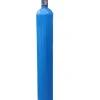
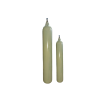
A medical oxygen cylinder is a high-pressure steel or aluminium tank filled with compressed, medical-grade oxygen — typically 99.5% pure. It stores oxygen at very high pressure (often around 2,000 psi when full) and releases it in a controlled way through a regulator and flow meter, delivering supplemental oxygen to a patient through a nasal cannula or oxygen mask.
In Bangladesh, home users most commonly choose:
- Portable cylinders (small, easy to carry, ideal for emergencies and travel)
- Standard 1.36 m³ cylinders (the everyday home-care workhorse, such as the Linde medical cylinder)
- Jumbo cylinders (large-capacity tanks for patients needing continuous oxygen supply over long hours)
One point matters more than anything else: only medical oxygen carries a drug licence number from regulators such as the Directorate General of Drug Administration under the Ministry of Health, Bangladesh. Industrial oxygen — used for welding — is cheaper but contains impurities and is never safe for human use. Trusted brands available through Medical Product BD include Linde, BOC, Owgels, Yuwell, and Longfian.
Why Safe Oxygen Use at Home Matters
Home oxygen therapy saves lives. The World Health Organization (WHO) lists medical oxygen as an essential medicine, and for patients with chronic respiratory disease it can mean the difference between repeated hospital admissions and a stable life at home.
But oxygen is also a powerful oxidiser. It does not explode or burn on its own — a common misconception — yet it dramatically accelerates any fire nearby. A cigarette that would smoulder in normal air can flare violently in an oxygen-rich room. Add high tank pressure to that equation, and careless handling becomes genuinely dangerous.
Safe use protects three things at once: the patient (correct dosing and clean equipment), the home (fire prevention), and the equipment itself (a well-maintained cylinder and regulator last for years).
Who Needs Home Oxygen Therapy?
Doctors typically prescribe home oxygen — either through an oxygen cylinder or an oxygen concentrator — for patients living with:
- COPD (chronic obstructive pulmonary disease)
- Severe or poorly controlled asthma
- Pneumonia recovery, especially in elderly patients
- Pulmonary fibrosis and other interstitial lung diseases
- COVID-19 recovery with lingering low oxygen saturation
- Heart failure where the heart cannot circulate enough oxygenated blood
- Sleep-related breathing disorders, often alongside CPAP or BiPAP machines
- Post-surgical recovery and palliative care at home
If your family member falls into any of these groups, having a properly set-up home oxygen system — and knowing how to operate it confidently — is part of the care plan, not an optional extra.
Signs You May Need Supplemental Oxygen
Never start oxygen therapy on your own. That said, contact a doctor promptly if you or your patient shows:
- SpO₂ readings consistently below 92–95% on a pulse oximeter
- Shortness of breath during light activity or at rest
- Bluish tint on lips, fingertips, or nail beds (cyanosis)
- Rapid breathing or a racing heartbeat
- Morning headaches, confusion, or unusual drowsiness
- Extreme fatigue that doesn’t improve with rest
A doctor will confirm the need using pulse oximetry or an arterial blood gas test, then prescribe an exact flow rate in litres per minute (LPM). That prescription is your instruction manual — the whole home setup revolves around it.
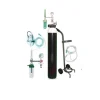
Parts of a Home Oxygen Cylinder Setup
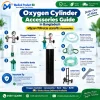
Before learning how to use an oxygen cylinder, get familiar with the five parts you’ll touch every day:
- Cylinder valve — the main tap on top of the tank; opens and closes oxygen supply.
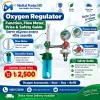
- Regulator with pressure gauge — reduces the tank’s high pressure to a safe, usable level and shows how much oxygen remains.
- Flow meter — the dial or knob that sets the prescribed LPM.
- Humidifier (bubbler) bottle — filled with distilled water, it moistens the oxygen so it doesn’t dry the patient’s nose and throat.
- Nasal cannula or oxygen mask with tubing — delivers oxygen to the patient. Cannulas suit low flows (1–5 LPM); masks suit higher flows.
Medical Product BD supplies every full setup with all five components, plus a cylinder stand or trolley — and our technician demonstrates each part during installation.
How to Use an Oxygen Cylinder at Home: Step-by-Step
Here is the exact sequence our technicians teach families across Dhaka, from Shewrapara to Bashundhara R/A. Follow it in order every time.
Position the cylinder safely
Stand the cylinder upright in its stand or secure it with a chain against a wall. Choose a well-ventilated spot at least 2 metres from stoves, heaters, candles, and electrical sparks. Never lay a cylinder flat while in use.
Check the equipment
Confirm the regulator is firmly attached to the valve outlet and the washer/seal is intact. Fill the humidifier bottle to its marked line with distilled or cooled boiled water — never tap water straight from the line.
Open the valve slowly
Turn the main valve counter-clockwise, slowly, by hand — about half to one full turn is enough. A slow opening protects the regulator from pressure shock. Use a cylinder key or wrench only if the valve is stiff, and never force it.
Read the pressure gauge
Check that the gauge shows sufficient pressure. A full cylinder typically reads near 2,000 psi; if the needle sits in the red zone, arrange a refill or switch to your backup oxygen supply before starting therapy.
Set the prescribed flow rate
Turn the flow meter knob until the ball or indicator sits exactly at the doctor-prescribed number — commonly 1–5 LPM for home patients. You should see gentle bubbling in the humidifier bottle. Do not increase the flow on your own, even if the patient feels breathless; call the doctor instead.
Fit the cannula or mask
Place the nasal cannula prongs curving downward into the nostrils and loop the tubing over the ears, or fit the mask snugly over nose and mouth. Check that the tubing has no kinks or pinches.
Monitor the patient
After 10–15 minutes, check SpO₂ with a pulse oximeter. Watch breathing comfort and note the reading in a daily log — your doctor will thank you for it.
Shut down properly
When therapy ends, close the main valve fully (clockwise), let the remaining oxygen bleed out of the flow meter until the indicator drops to zero, then turn the flow meter off. This releases trapped pressure and protects the regulator.
How to Set the Correct Oxygen Flow Rate
The flow rate — measured in litres per minute — is a medical dose, exactly like a medicine dose. Common prescriptions look like this:
| Patient Situation (examples) | Typical Prescribed Flow* |
|---|---|
| Mild COPD, stable at home | 1–2 LPM via nasal cannula |
| Moderate respiratory support | 2–4 LPM via nasal cannula |
| Higher support needs | 5–10 LPM via face mask |
| Emergency/acute (hospital-directed) | 10–15 LPM via non-rebreather mask |
*Illustrative only. Always follow your own doctor’s prescription — for COPD patients in particular, too much oxygen can suppress the drive to breathe and cause dangerous carbon dioxide buildup.
Two practical tips: check the flow ball at eye level for an accurate reading, and re-check the setting after moving the cylinder, since knobs get bumped during transport.
Oxygen Cylinder vs Oxygen Concentrator: Which Is Better?
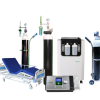
This is the question we hear most at Medical Product BD, so let’s settle the oxygen concentrator vs cylinder debate honestly: neither is “better” — they solve different problems, and many families in Bangladesh keep both.
An oxygen concentrator is an electricity-powered oxygen machine that pulls in room air, filters out nitrogen, and delivers 90–95% concentrated oxygen continuously. It never runs empty, making it ideal for long-term oxygen therapy. An oxygen cylinder stores a fixed volume of 99.5% pure compressed oxygen, works without electricity, and delivers high flow rates instantly — perfect for emergencies and as a backup.
Comparison Table: Oxygen Concentrator vs Oxygen Cylinder
| Factor | Oxygen Cylinder | Oxygen Concentrator |
|---|---|---|
| Oxygen purity | ~99.5% (medical grade) | 90–95% |
| Power requirement | None — works during load-shedding | Requires continuous electricity |
| Oxygen supply | Finite; needs refills | Unlimited while powered |
| Best flow capability | Very high (up to 15 LPM setups) | Usually 5–10 LPM depending on model |
| Running cost | Refill cost per cylinder (৳300–800) | Electricity bill (~300–600 watts) |
| Upfront price in BD | ৳7,500–22,000 | ৳35,000–90,000+ |
| Portability | Portable models available; heavy in large sizes | Portable oxygen concentrator models exist but cost more |
| Maintenance | Minimal — valve, regulator, refills | Filters, sieve beds, periodic servicing |
| Ideal for | Emergencies, backup, high-flow needs, areas with power cuts | Long-term daily oxygen therapy (15+ hours/day) |
| Noise | Silent | Mild humming sound |
Our honest recommendation: for a patient on continuous oxygen supply for months, an oxygen concentrator is more economical — but keep a filled cylinder as backup, because load-shedding in Bangladesh is a reality and a concentrator without electricity is just furniture. For occasional or emergency use, a cylinder alone is the affordable, dependable choice. Medical Product BD sells and rents both, so you can even rent an oxygen concentrator for a month and see how it fits your routine before buying.
Daily Care Plan for Home Oxygen Users
A simple routine keeps therapy safe and equipment healthy:
Every day:
- Check the pressure gauge and record remaining oxygen.
- Wipe the cannula/mask; check tubing for kinks or cracks.
- Refresh distilled water in the humidifier bottle.
- Log the patient’s SpO₂ readings morning and evening.
Every week:
- Wash the humidifier bottle with warm soapy water, rinse, and air-dry.
- Clean cannula/mask thoroughly or replace if discoloured.
- Dust the cylinder, valve area, and stand; check the chain or bracket.
Every 2–4 weeks:
- Replace the nasal cannula (every 2 weeks is ideal).
- Inspect the regulator seal for wear.
- Schedule your refill before the gauge nears empty — keep a backup oxygen supply ready.
Every 6–12 months:
- Have the regulator and flow meter professionally inspected and calibrated. Medical Product BD’s maintenance team handles this at your home.
12 Essential Oxygen Cylinder Safety Tips
- No smoking, anywhere near the cylinder — ever. Put a visible “Oxygen in Use – No Smoking” sign on the room door.
- Keep 2 metres of clearance from open flames, gas stoves, mosquito coils, candles, and room heaters.
- Store cylinders upright and secured with a stand, chain, or wall bracket so they can never fall.
- Never use oil, grease, or petroleum jelly on the valve, regulator, or your hands while handling the cylinder — petroleum products can ignite in pure oxygen.
- Avoid aerosol sprays and perfumes in the oxygen room; many are flammable.
- Open the valve slowly, by hand. Sudden opening is the number-one cause of regulator damage.
- Ventilate the room. Keep a window slightly open so oxygen never accumulates in the air.
- Don’t drape clothes or cover the cylinder — fabric traps escaping oxygen.
- Keep a working fire extinguisher in the home and make sure adults know where it is.
- Use only medical-grade oxygen with a valid drug licence number — never industrial welding oxygen.
- Turn the valve off completely whenever the cylinder is not in use, even for short breaks.
- Transport with care: valve closed, cap on, cylinder secured — never rolled or dragged across the floor.
Common Mistakes Families Make (and How to Avoid Them)
Mistake 1: Increasing the flow rate when the patient feels breathless. More oxygen is not automatically safer — for COPD patients it can be harmful. Call the doctor; don’t touch the dial.
Mistake 2: Using tap water in the humidifier bottle. Tap water introduces minerals and microbes into the airway. Use distilled or cooled boiled water only.
Mistake 3: Waiting until the cylinder is empty to order a refill. In an emergency, an empty tank is a crisis. Reorder when the gauge reaches one-quarter, and keep a portable backup.
Mistake 4: Storing the cylinder in the kitchen or beside the generator. Heat sources and oxygen must never share a room.
Mistake 5: Never cleaning the cannula or tubing. Dirty tubing harbours bacteria and fungi that travel straight into the lungs. Follow the weekly cleaning routine above.
Mistake 6: Buying cheap industrial oxygen to save money. Industrial oxygen is under 90% pure and may contain contaminants. The savings are not worth a lung infection.
Mistake 7: Letting untrained visitors “help” with the equipment. Only trained caregivers should operate the valve and flow meter. Ask Medical Product BD for a free caregiver training session during installation.
Professional Advice from Respiratory Care Experts
Guidance from bodies like the NHS, CDC, and Mayo Clinic on home oxygen consistently emphasises a few themes worth repeating:
- Treat oxygen as a prescription medicine. Use the prescribed flow, for the prescribed hours, through the prescribed device.
- Long-term oxygen therapy works best with consistency. Patients prescribed 15+ hours a day benefit most when they actually complete those hours — an argument for pairing a concentrator (daily use) with a cylinder (backup and mobility).
- Monitor, don’t guess. A ৳1,000–2,000 pulse oximeter turns caregiving from guesswork into data. Share your SpO₂ log at every doctor visit.
- Plan for emergencies. Save your oxygen supplier’s 24/7 number, know your refill turnaround time, and keep emergency contacts beside the cylinder.
- Ask for training. Reputable suppliers demonstrate the full setup. If a seller simply drops a cylinder at your door and leaves, choose a different supplier.
How Medical Product BD Delivers and Sets Up Your Cylinder
Wondering what actually happens when you order? Here’s our step-by-step process:
- Consultation (5 minutes): Call or message us with the doctor’s prescription or your requirement. Our advisor recommends the right cylinder size, or an oxygen concentrator rental if that suits better.
- Confirmation & pricing: You receive a transparent quote — cylinder, regulator, flow meter, humidifier bottle, cannula/mask, and stand. No hidden charges.
- Fast delivery: Same-day delivery across Dhaka — we regularly reach homes in Jigatola, Uttara Sector 7, and Khilgaon within hours — and courier delivery to every district in Bangladesh.
- Professional installation: Our technician assembles the full setup, tests the flow, and checks for leaks.
- Caregiver training: We demonstrate opening the valve, setting the flow rate, fitting the mask, and the shutdown routine — and answer every question until your family feels confident.
- Ongoing support: Refills, maintenance, spare parts, rental extensions, and 24/7 emergency assistance. One phone number covers everything, for the life of the equipment.
BENEFITS (of a Home Oxygen Cylinder from Medical Product BD)
- Delivers 99.5% pure medical-grade oxygen — higher purity than any concentrator
- Works with zero electricity — completely reliable during load-shedding
- Provides instant, high-flow oxygen in emergencies
- Reduces repeat hospital admissions for chronic respiratory patients
- Enables comfortable long-term oxygen therapy at home
- Supports COPD, asthma, pneumonia, and COVID-19 recovery patients
- Improves sleep quality for patients with low nighttime oxygen saturation
- Boosts energy and daily activity levels by correcting oxygen deficits
- Portable models allow safe travel and outdoor mobility
- Far lower upfront cost than an oxygen concentrator
- Silent operation — no motor noise disturbing the patient’s rest
- Acts as an essential backup oxygen supply for concentrator users
- Simple mechanical design means minimal maintenance and long lifespan
- Affordable refills keep long-term running costs predictable
- Available for rent (daily, weekly, monthly) — no need to buy for short-term recovery
- Delivered, installed, and demonstrated at home by trained professionals
- Backed by 24/7 emergency support across Dhaka and Bangladesh
FEATURES
- High-pressure steel or lightweight aluminium cylinder body
- Medical-grade oxygen with 99.5% purity and drug licence certification
- Precision regulator with clear pressure gauge for at-a-glance monitoring
- Adjustable flow meter supporting 0–15 LPM settings
- Humidifier (bubbler) bottle to moisten oxygen and protect airways
- Compatible with nasal cannula, standard mask, and non-rebreather mask
- Sturdy floor stand or wheeled trolley for safe upright storage
- Leak-proof valve system with protective cap for transport
- Standard BD-compatible valve fittings for easy refilling anywhere
- Available in portable, standard, and jumbo capacities
- Refill-ready design — exchange or refill at Medical Product BD anytime
- Rust-resistant, pressure-tested construction meeting safety standards
- Colour-coded body identifying certified medical oxygen
- Compatible with trusted brands: Linde, BOC, Owgels, Yuwell, Longfian
- Complete package includes tubing, cannula, mask, and cylinder key
- Optional pulse oximeter bundle for home SpO₂ monitoring
- Rental and purchase options with warranty-backed accessories
PEOPLE ALSO ASK
- How do you use an oxygen cylinder at home for the first time? Secure the cylinder upright, attach the regulator and humidifier, open the valve slowly by hand, set the doctor-prescribed flow rate, and fit the nasal cannula or mask. Have a technician demonstrate the first setup.
- How long does an oxygen cylinder last at 2 litres per minute? A standard 1.36 m³ (about 1,360-litre) cylinder lasts roughly 10–11 hours at 2 LPM. Portable cylinders last 3–5 hours; jumbo cylinders can run for days.
- Is an oxygen cylinder dangerous at home? Not when handled correctly. Oxygen doesn’t burn itself but accelerates fire, so keep flames, smoking, and oil-based products away and store the cylinder upright and secured.
- What flow rate of oxygen is normal for home patients? Most home prescriptions fall between 1 and 5 LPM through a nasal cannula, but the exact rate must come from a doctor.
- Can I use an oxygen cylinder without a doctor’s prescription? No. Oxygen is a medical treatment; the wrong dose — especially for COPD patients — can be harmful. Always get a prescribed flow rate first.
- Which is better for home use, an oxygen cylinder or a concentrator? Concentrators suit continuous long-term therapy; cylinders offer higher purity, work without electricity, and are ideal for emergencies and backup. Many families use both.
- What is the price of an oxygen cylinder in Bangladesh? Full home setups range from about ৳7,500 for Chinese portable cylinders to ৳11,000–12,000 for Linde cylinders and ৳18,000–22,000 for jumbo sizes.
- How do I refill an oxygen cylinder in Dhaka? Call a licensed medical oxygen supplier like Medical Product BD; refills typically cost ৳300–800 and same-day exchange service is available across Dhaka.
- Why is there a water bottle attached to the oxygen cylinder? That’s the humidifier (bubbler) bottle. It moistens the dry compressed oxygen so it doesn’t irritate the patient’s nose, throat, and airways.
- Can oxygen cylinders explode? Explosions are extremely rare and almost always involve heat exposure, oil contamination, or physical damage. Proper storage — upright, cool, secured, away from flames — makes cylinders very safe.
RELATED SEARCHES
- oxygen cylinder price in Bangladesh 2026
- oxygen cylinder for home use in Dhaka
- how to use oxygen cylinder for patient at home
- oxygen concentrator vs oxygen cylinder which is better
- oxygen cylinder refill price in Dhaka
- Linde oxygen cylinder price in BD
- portable oxygen cylinder for travel Bangladesh
- oxygen cylinder rental near me Dhaka
- oxygen flow meter setting for COPD patients
- medical oxygen cylinder home delivery 24 hours Dhaka
FAQs
1. What is the correct way to open an oxygen cylinder valve? Turn it counter-clockwise slowly by hand, about half to one full turn. Slow opening prevents pressure shock that can damage the regulator.
2. How do I know how much oxygen is left in the cylinder? Read the pressure gauge on the regulator. A full standard cylinder shows around 2,000 psi; arrange a refill when the needle reaches one-quarter or enters the red zone.
3. What water should I use in the humidifier bottle? Only distilled water or cooled boiled water. Change it daily and wash the bottle weekly to prevent bacterial growth.
4. How often should the nasal cannula be replaced? Every two weeks with regular use, or immediately if it becomes discoloured, stiff, or damaged. Masks should be replaced monthly.
5. Can the patient sleep while using the oxygen cylinder? Yes — many patients use oxygen overnight. Secure the tubing so it can’t wrap around the neck, and check the flow setting before sleep.
6. Is it safe to cook in the same house as an oxygen cylinder? Yes, as long as the cylinder is in a different room, at least 2 metres from any flame, and the patient doesn’t wear the cannula near the stove.
7. What should I do if the patient still feels breathless at the prescribed flow? Do not increase the flow yourself. Check for kinked tubing and correct cannula placement, verify the cylinder isn’t empty, then call the doctor immediately.
8. How much does oxygen cylinder rental cost in Dhaka? Rental plans at Medical Product BD start with affordable daily and weekly rates, with discounted monthly and long-term packages. Call for today’s rates and availability.
9. Do you provide emergency oxygen delivery at night? Yes. Medical Product BD operates 24 hours across Dhaka, including emergency oxygen supply and urgent refills.
10. What’s the difference between medical and industrial oxygen? Medical oxygen is 99.5% pure, certified with a drug licence number, and safe for breathing. Industrial oxygen is under 90% pure, may contain contaminants, and must never be used for patients.
11. Can I take a portable oxygen cylinder while travelling? Yes, for road travel — keep it upright, capped, and secured. Airlines generally prohibit personal cylinders, so ask about a portable oxygen concentrator for air travel.
12. How long does a jumbo oxygen cylinder last? At 2 LPM, a jumbo cylinder can supply oxygen continuously for two to three days or more, making it economical for patients on long-term oxygen therapy.
13. Does an oxygen concentrator need a cylinder as backup? We strongly recommend it. During power cuts, a concentrator stops working — a filled backup cylinder keeps therapy uninterrupted.
14. Who installs the oxygen cylinder at my home? A trained Medical Product BD technician delivers, installs, leak-tests, and demonstrates the complete setup free with every purchase or rental in Dhaka.
15. How do I book a refill or a new cylinder from Medical Product BD? Call our 24/7 hotline, message us on WhatsApp, or order through medicalproductbd.com. Same-day service is available throughout Dhaka and delivery covers all of Bangladesh.