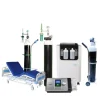

Emergency Oxygen Service in Dhaka: 24/7 Cylinder Delivery, Setup & the Critical-Hour Playbook
Some phone calls can’t wait until morning. When a parent’s breathing turns shallow at midnight, when a pulse oximeter shows a number that makes your stomach drop, when the home cylinder runs empty hours ahead of schedule — you need an emergency oxygen service in Dhaka that answers on the first ring and moves immediately. That is exactly what Medical Product BD’s emergency line does: 24 hours a day, our dispatch team sends a filled medical oxygen cylinder, complete accessories, and a trained technician to any address in Dhaka city, typically arriving within 60–90 minutes.
But this article gives you more than a phone number. It’s a complete emergency playbook: how to recognize a true oxygen emergency, when to call a hospital instead, what to do in the critical minutes before help arrives, and how to prepare your household so the next emergency never catches you unready.
Featured Snippet Box
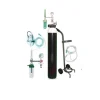
What is an emergency oxygen service in Dhaka? An emergency oxygen service delivers filled medical oxygen cylinders to homes in Dhaka around the clock, typically within 60–90 minutes. Providers like Medical Product BD dispatch a trained technician with the cylinder, regulator, flow meter, humidifier, and mask, install the setup on arrival, and support the patient until stable supply is arranged.
Quick Answer
Call the 24/7 emergency hotline, state the patient’s condition, prescribed flow rate (if known), and address. A priority team dispatches immediately with a filled cylinder and full accessories, installs everything at the bedside, verifies the flow, and stays until the setup runs correctly — day, night, weekend, or holiday, anywhere in Dhaka.
Key Takeaways
- Severe breathing distress is a hospital emergency first — call 999 or go to the nearest emergency department; home oxygen supports treatment, it doesn’t replace urgent medical care.
- A true emergency oxygen service runs 24/7 with priority dispatch, reaching most Dhaka addresses in 60–90 minutes.
- Emergency deliveries should arrive as complete setups — cylinder, regulator, flow meter, humidifier, mask — installed by a trained technician, not a bare tank at the gate.
- While waiting, keep the patient sitting upright, calm, and in fresh air; never leave them alone.
- The families who handle emergencies best saved the hotline and prepared a backup plan weeks earlier.
- Medical Product BD charges flat rates around the clock — no night-time or holiday surcharges.
What Is an Emergency Oxygen Service?
An emergency oxygen service is a priority-dispatch system built for situations where waiting isn’t an option. Unlike a standard delivery order, an emergency call jumps the queue: the nearest available team loads a filled, inspected cylinder with complete accessories and heads out immediately, with the dispatcher staying reachable throughout.
At Medical Product BD, the emergency service covers three urgent scenarios. Sudden need — a patient with no equipment at home suddenly requires oxygen on a doctor’s urgent advice. Supply failure — an existing cylinder runs empty early, a regulator fails, or a concentrator dies during load-shedding. Rapid replacement — a cylinder fails inspection or a swap is needed mid-therapy without interruption. In every case, the deliverable is the same: working oxygen at the patient’s bedside, verified by a professional, in the shortest possible time.
Hospital, Ambulance, or Oxygen Service? Making the Right Call
This is the most important section of this article. An oxygen delivery service is not an ambulance, and knowing the difference protects lives:
Call 999 / go to hospital immediately when: the patient is gasping, unable to speak full sentences, turning blue at the lips, losing consciousness, clutching their chest, or deteriorating rapidly. These need emergency medicine — doctors, drugs, and hospital-grade intervention — not just oxygen.
Call the emergency oxygen service when: a doctor has advised or prescribed oxygen and you need supply urgently; a stable home-therapy patient’s cylinder has run out or failed; saturation is drifting low in a known, managed patient and the physician says to start or continue oxygen at home; or you need a backup cylinder during a power cut affecting a concentrator.
When in doubt, do both: head toward medical care and let us coordinate equipment for the return home. Our dispatchers will honestly tell you if your situation sounds like it needs a hospital first — because the right call matters more than the sale.
Why Emergency Oxygen Access Matters in Dhaka
Dhaka’s realities make emergency oxygen logistics genuinely hard. Traffic can stretch a 5-kilometre trip into an hour. Load-shedding silences oxygen concentrators without warning. Most families own no vehicle capable of safely moving a 14–16 kg cylinder at night. And respiratory crises — COPD flare-ups, pneumonia complications, cardiac patients desaturating — cluster in the very hours when ordinary shops are shut.
The WHO classifies medical oxygen as an essential medicine precisely because delayed access costs lives. A professional emergency network answers that problem structurally: pre-positioned filled cylinders, dispatchers awake at 3 AM, riders who know every shortcut, and technicians who make the equipment work on arrival rather than leaving a family to figure out a regulator under pressure.
Who Needs Emergency Oxygen Service on Standby?
- Every household with a home oxygen patient — chronic therapy makes supply failures a matter of when, not if
- Concentrator-dependent families with no cylinder backup for power cuts
- Caregivers of COPD, pulmonary fibrosis, and heart failure patients prone to sudden exacerbations
- Post-discharge families in the fragile first weeks after hospital release
- Home ICU setups, where oxygen interruption is never acceptable
- Elderly patients living with elderly spouses, who cannot self-rescue a supply failure
- Clinics, diagnostic centers, and event medical teams needing urgent top-up supply
- Anyone who has ever thought “we should have a plan” — that thought is the plan’s first step
Warning Signs That Trigger an Emergency Call
For a patient already under medical management, these signs justify picking up the phone without delay:
- SpO₂ falling below the doctor’s stated target and not recovering with rest
- Breathlessness during rest or speech in a known respiratory patient
- The pressure gauge in the red zone with hours of therapy still needed
- Concentrator failure or extended power cut for a continuous-use patient
- A hissing regulator, stuck valve, or visible equipment fault mid-therapy
- Doctor’s urgent instruction to begin oxygen before a hospital transfer or during home treatment
And once more, because it matters: gasping, blue lips, confusion, chest pain, or collapse are hospital signs. Call 999 first.
What to Do While the Oxygen Is On Its Way
The 60–90 minutes before arrival are not passive waiting time. Simple, safe steps help the patient:
- Sit the patient upright — leaning slightly forward, arms supported on a table or pillows. This position opens the chest and eases breathing effort.
- Loosen tight clothing around the neck, chest, and waist.
- Ventilate the room — open windows, switch on a fan pointed near (not blasting at) the face; moving air often reduces the sensation of breathlessness.
- Keep them calm and keep them company. Panic accelerates breathing and burns oxygen; a steady voice and slow-breathing encouragement (“in through the nose, out through pursed lips”) genuinely helps.
- Don’t crowd the patient — one calm caregiver beats five anxious relatives.
- Keep the pulse oximeter on and note readings every few minutes; report changes to the dispatcher or doctor.
- Nothing to eat or drink if the patient is severely breathless or drowsy.
- Clear the path — unlock the gate, send someone downstairs, keep the phone line free. Every saved minute is oxygen.
- If anything worsens sharply, switch plans immediately: 999 and the nearest hospital.
Benefits of Our Emergency Oxygen Service in Dhaka
- 24/7/365 availability — nights, weekends, Eid, and hartals included
- 60–90 minute response to most Dhaka city addresses
- Priority dispatch — emergency calls jump every queue
- Complete setups delivered, never a bare cylinder
- Trained technician installs and verifies the flow at the bedside
- Certified medical-grade oxygen in every emergency fill
- Flat, honest pricing — no midnight or holiday surcharges
- Dispatcher stays reachable from call to arrival
- Honest triage — we’ll tell you if your case needs a hospital first
- Swap and backup cylinders for continuous-therapy patients
- Pulse oximeters and accessories deliverable in the same run
- Load-shedding rescue for concentrator-dependent homes
- Follow-up support to convert the emergency into a stable supply plan
- Coverage of every Dhaka neighborhood from a single hotline
- Institutional emergency supply for clinics and event medical teams
- One saved contact that replaces a night of frantic searching
Features of Our Emergency Response System
- Dedicated emergency hotline answered by trained dispatchers, not menus
- WhatsApp emergency booking with live location sharing
- Pre-filled, pre-inspected cylinders staged for instant loading
- GPS-routed riders familiar with Dhaka’s night shortcuts
- Full accessory kit on every run: regulator, flow meter, humidifier, mask, cannula
- On-arrival gauge verification shown to the family
- Bedside installation, leak test, and prescribed flow setting
- Two-minute caregiver briefing before the technician leaves
- Emergency swap protocol for zero-interruption cylinder changes
- Real-time status updates by SMS or WhatsApp
- Cash, bKash/Nagad, and digital payment accepted at the door
- Post-emergency follow-up call within 24 hours
- Conversion path to rental, purchase, or standing refill plans
- Incident notes kept for your doctor’s review on request
- Bulk emergency protocols for clinics and nursing homes
- Nationwide emergency coordination beyond Dhaka via courier partners
Step-by-Step: What Happens When You Call
The call (under 2 minutes). Tell the dispatcher: patient’s condition, prescribed flow rate if known, your exact address and a landmark, and a reachable phone number. If the case sounds hospital-level, we’ll say so immediately.
Instant dispatch. The nearest team loads a filled, inspected cylinder with the complete accessory kit and departs. You receive a confirmation with the rider’s contact.
Guidance while you wait. The dispatcher shares the critical-hour steps — positioning, ventilation, calm breathing — and stays reachable for updates.
Arrival and verification. The technician shows you the full pressure gauge, carries the cylinder to the bedside, and assembles the regulator, flow meter, humidifier, and mask.
Therapy starts, checked and set. Flow is set to the prescription, connections are leak-tested, and the patient is breathing supported oxygen — typically within minutes of the knock.
Stabilize the future. Before leaving, the technician briefs the caregiver, and our team follows up within a day to arrange refills, a backup cylinder, or a rental plan so tonight’s emergency becomes the last one.
The Emergency Preparedness Care Plan
- Today: Save the 24/7 hotline under a name you’ll find in panic (“Oxygen Emergency“). Write the patient’s prescribed flow rate on a card taped near the bed.
- This week: Note your address’s landmark directions in your phone — describing your lane calmly at 2 AM is harder than it sounds. Confirm your building gate can be opened at night.
- This month: Arrange a backup cylinder if the patient uses oxygen continuously; test that both trained caregivers can perform the full valve-to-mask sequence and a cylinder swap.
- Every month: Check the backup cylinder’s gauge; rehearse the two-minute emergency drill; refresh the pulse oximeter batteries.
- After any emergency: Debrief — what delayed you, what worked — and tell your doctor what happened, with the SpO₂ readings you logged.
Safety Tips During an Oxygen Emergency
- Hospital signs mean hospital — never substitute a cylinder for emergency medicine when the patient is severely distressed.
- Keep flames far away even in the rush — no candles during load-shedding near the setup; use torches or phone lights.
- Don’t move a struggling patient to meet the delivery — bring the oxygen to them; that’s our job.
- Never crank the flow above the prescription “to help faster” — excess oxygen can harm, especially COPD patients.
- Open the arriving cylinder’s valve slowly, and let the technician do the assembly.
- Verify the gauge together before the technician leaves — even in a crisis, thirty seconds of verification is worth it.
- Keep the room ventilated, the cylinder upright and secured, and children clear of the equipment.
- After stabilizing, call the doctor — every emergency is information your physician needs.
Common Mistakes Families Make in the Critical Hour
- Searching instead of calling. Scrolling listings at 1 AM burns the minutes a saved number would have spent on dispatch.
- Choosing the cylinder when the situation needed the hospital. Severe distress goes to 999 first — always.
- Sending someone out to find a shop. Night-time Dhaka rarely rewards the search; delivery is faster and safer.
- Crowding and panicking around the patient, which worsens their breathing and drowns out the one calm voice they need.
- Laying the breathless patient flat. Upright, leaning slightly forward, is the position that helps.
- Accepting a bare tank from an informal source — no regulator, no verification, unknown gas. Speed without safety isn’t rescue.
- Not unlocking the gate. Riders lose precious minutes at locked buildings with unreachable phones.
- Treating the emergency as over once oxygen flows. Without a follow-up plan, the same night repeats next month.
Professional Advice From Our Emergency Team
Our dispatchers, who take these calls every night, want every Dhaka family to internalize three things. First, decide the hospital question in advance: agree with your doctor, today, which symptoms mean 999 and which mean the oxygen hotline — a decision made calmly beats one made at 3 AM. Second, the strongest emergency response is the one you never need: a backup cylinder, a charged pulse oximeter, and monthly gauge checks quietly prevent most midnight calls; guidance from the NHS and Mayo Clinic on home oxygen consistently emphasizes exactly this kind of preparedness. Third, when you do call, information is speed: condition, flow rate, address, landmark — four facts, calmly given, can shave fifteen minutes off an emergency run through this city’s streets.
Emergency Coverage Across Dhaka City
Our night riders know this city block by block — an urgent run to a flat in Kalabagan, a load-shedding rescue in Rampura, a cylinder swap near the offices of Motijheel, a post-discharge emergency in Mirpur 2, a 4 AM delivery out toward Dakshinkhan. Wherever you are in Dhaka, one hotline reaches you; beyond the capital, our emergency coordination extends through courier partners to Chattogram, Sylhet, Rajshahi, Khulna, Rangpur, Barishal, Mymensingh, and every district of Bangladesh.
Conclusion
A true emergency oxygen service in Dhaka is more than fast delivery — it’s a system: honest triage that sends hospital cases to hospitals, pre-staged cylinders that move the moment you call, technicians who make the equipment work at the bedside, and follow-up that turns tonight’s crisis into tomorrow’s plan. Medical Product BD built that system and runs it around the clock, at flat rates, for every neighborhood in this city.
The playbook is now yours: know the hospital signs, prepare the household, and save the number. When the hard night comes, you’ll be ready — and so will we.
PEOPLE ALSO ASK
- How fast can emergency oxygen be delivered in Dhaka? Medical Product BD’s 24/7 emergency service typically reaches most Dhaka addresses within 60–90 minutes, with priority dispatch the moment your call ends.
- Is emergency oxygen delivery available at night in Dhaka? Yes — the emergency hotline operates 24 hours a day, every day of the year, including weekends and public holidays, at flat rates.
- What comes with an emergency oxygen delivery? A filled, inspected medical cylinder plus regulator, flow meter, humidifier bottle, mask or nasal cannula — installed at the bedside by a trained technician.
- When should I call an ambulance instead of an oxygen service? For gasping, inability to speak, blue lips, chest pain, confusion, or collapse — call 999 or go to hospital immediately. Oxygen services supply equipment for doctor-managed patients; they don’t replace emergency medicine.
- What should I do while waiting for emergency oxygen? Sit the patient upright leaning slightly forward, loosen tight clothing, ventilate the room, keep them calm with slow pursed-lip breathing, monitor SpO₂, and keep the entrance clear.
- Does emergency oxygen delivery cost extra at night? Not at Medical Product BD — pricing stays flat around the clock, with no midnight or holiday surcharges.
- Can I get emergency oxygen without a prescription? Supply can be arranged urgently, but oxygen is a medical treatment: the flow rate should follow a doctor’s guidance, and our team sets it accordingly.
- What if my oxygen concentrator stops during load-shedding? Call the emergency line for a rapid cylinder delivery — and consider keeping a backup cylinder at home so power cuts never interrupt therapy.
- Do you provide emergency cylinder swaps for empty cylinders? Yes — swap protocols exchange your empty cylinder for a filled one on the spot, keeping continuous-therapy patients supplied without interruption.
- Is emergency oxygen available outside Dhaka? Fastest response is inside Dhaka city; beyond it, we coordinate urgent supply through courier partners across all districts of Bangladesh.
RELATED SEARCHES
- Emergency oxygen cylinder delivery Dhaka
- 24 hour oxygen service near me
- Oxygen cylinder home delivery at night Dhaka
- Urgent oxygen supply Bangladesh
- Oxygen delivery within 60 minutes Dhaka
- Emergency medical oxygen hotline BD
- Oxygen cylinder for load shedding backup
- What to do when oxygen cylinder runs out
- Emergency oxygen for COPD patient at home
- Night time oxygen refill service Dhaka
FREQUENTLY ASKED QUESTIONS
1. How do I contact the emergency oxygen service? Call our 24/7 hotline or message us on WhatsApp — dispatchers answer directly, day or night, and dispatch begins immediately after your call.
2. How quickly will oxygen reach my home in Dhaka? Most emergency deliveries arrive within 60–90 minutes, depending on distance and traffic. Night runs are often faster than daytime ones.
3. What information should I give when I call? Four things: the patient’s condition, the prescribed flow rate (if known), your exact address with a landmark, and a phone number that stays reachable.
4. Is the emergency service really available on holidays and at 3 AM? Yes — 365 days a year, all 24 hours, including Eid, weekends, and hartal days, at the same flat rates.
5. Do you install the cylinder or just drop it off? Every emergency delivery includes bedside installation: gauge verification, assembly of regulator and humidifier, leak testing, flow setting, and a quick caregiver briefing.
6. What does emergency delivery cost? Rates are flat and transparent — the same price at midnight as at noon. Call for the current emergency delivery rate for your area.
7. Can you tell me whether my situation needs a hospital instead? Yes, and we will — honestly. Severe distress (gasping, blue lips, collapse) is directed to 999 and the nearest hospital first; our dispatchers are trained to triage before they sell.
8. My patient uses a concentrator — can you rescue us during a power cut? Absolutely. Load-shedding rescues are among our most common emergency runs. Longer term, we recommend a backup cylinder so the gap never opens.
9. Can you swap my empty cylinder in an emergency? Yes — we bring a filled cylinder, install it, and take the empty one for refilling, so therapy continues without a pause.
10. Do you carry pulse oximeters or masks on emergency runs? Yes — mention what you need on the call and the rider brings accessories (oximeters, masks, cannulas, humidifier bottles) in the same run.
11. Will you deliver to hard-to-find addresses at night? Yes — that’s why we ask for a landmark and a reachable phone. Sending someone to the gate and keeping the line free speeds everything up.
12. Can hospitals, clinics, or event organizers use the emergency service? Yes — institutional emergency supply runs on the same hotline, with bulk protocols for clinics, nursing homes, and event medical teams.
13. What happens after the emergency is over? We follow up within 24 hours to arrange the stable plan — refill schedule, backup cylinder, rental, or a complete home ICU setup — so the emergency doesn’t repeat.
14. Is emergency oxygen medical-grade? Always. Every emergency cylinder carries certified medical-grade oxygen from licensed filling, inspected before dispatch.
15. How do I prepare so the next emergency goes smoothly? Save the hotline now, write the prescribed flow rate near the bed, keep a charged pulse oximeter, arrange a backup cylinder for continuous-use patients, and rehearse the caregiver drill monthly.