
Affordable Medical Oxygen Cylinder Rental
Oxygen Cylinder Rent for Home Use
Oxygen cylinder rent in Bashundhara R/A from ৳400/day, ৳2,500/week. Concentrators, backup planning, block-wise delivery. Call 01811122698 any time.
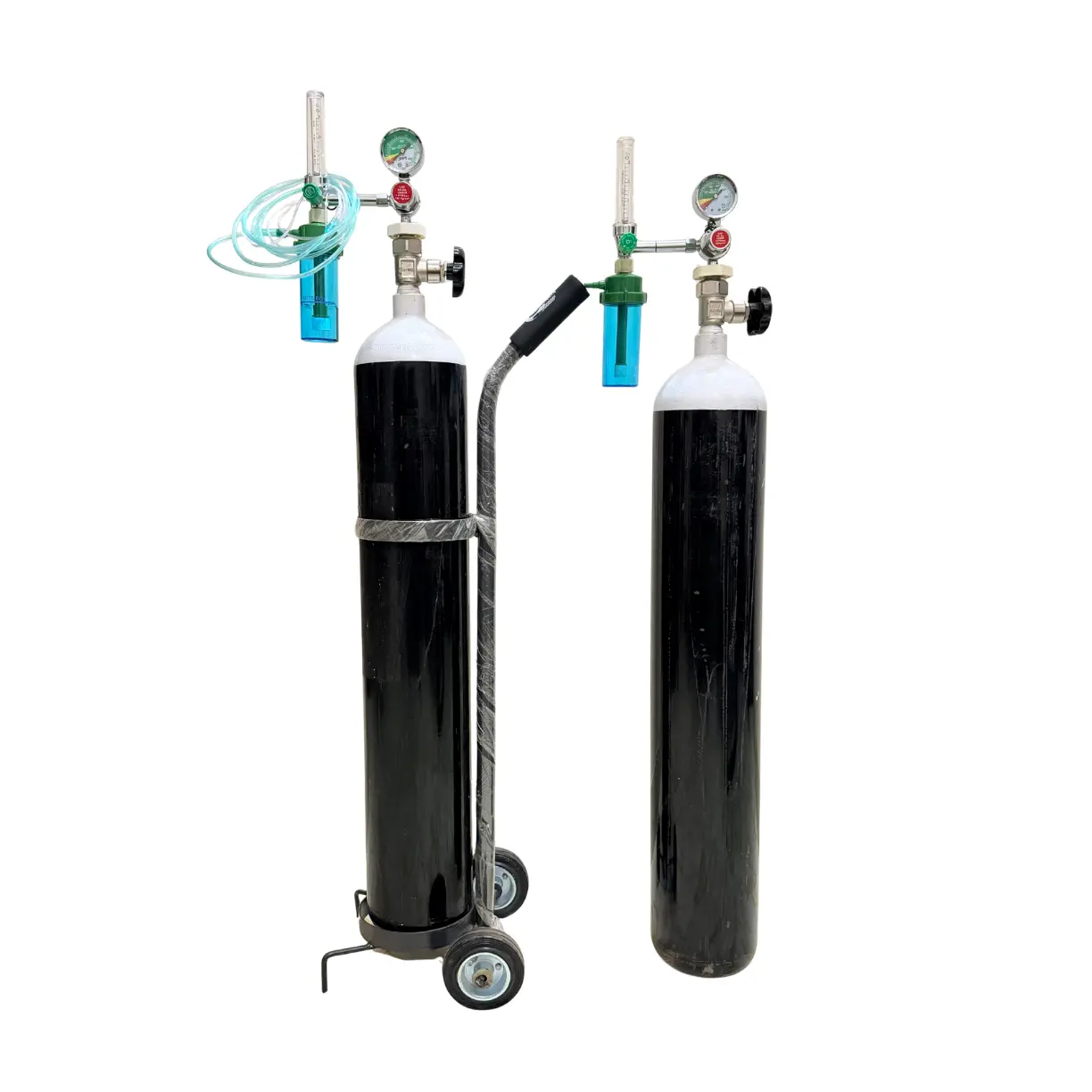
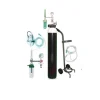
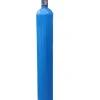
Oxygen cylinder rent in Bashundhara costs ৳400 per day, ৳2,500 per week or ৳4,500 per month for China and Islam cylinders. Linde (BOC) cylinders are ৳500 daily, ৳3,000 weekly and ৳5,000 monthly. Flow meter, regulator and mask are included, and the security deposit is fully refundable.
Oxygen Cylinder Rent in Bashundhara
| Package | Rent |
|---|---|
| Daily | ৳400 |
| 7 Days | ৳2,500 |
| 10 Days | ৳3,000 |
| 15 Days | ৳3,500 |
| 30 Days | ৳4,500 |
Linde (BOC) Oxygen cylinder rent in Bashundhara
| Package | Rent |
|---|---|
| Daily | ৳500 |
| 7 Days | ৳3,000 |
| 10 Days | ৳3,500 |
| 15 Days | ৳4,000 |
| 30 Days | ৳5,000 |
Oxygen Cylinder Purchase and Refill in Bashundhara
| Item | Price |
|---|---|
| China oxygen cylinder | ৳8,000 |
| Islam oxygen cylinder | ৳9,000 |
| Linde oxygen cylinder | ৳16,000 |
| Portable oxygen cylinder | ৳8,000 |
| Refill at our store | ৳500 |
| Refill with home delivery in Dhaka (China / Islam) | ৳800 |
| Refill with home delivery in Dhaka (Linde) | ৳900 |
Terms: a refundable security deposit applies and is returned when equipment comes back in working order. Collection and return are the customer’s responsibility. Additional conditions may apply by cylinder and duration, all explained before payment.
Call 24/7: +8801811122698
The Question Nobody Asks: What Happens When the Power Goes?
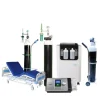
Long-term home oxygen in Bangladesh almost always ends up involving an oxygen concentrator. It draws oxygen from room air, runs indefinitely, and removes the refill treadmill entirely. For months of therapy it is the right machine.
It also stops the instant the electricity does.
A cylinder does not care about load-shedding. A concentrator cares enormously. Any long-term setup that ignores this has a hole in it, and families discover the hole at the worst possible moment.
Here is how to close it.
Keep one filled cylinder as the backup, always. This is the single most important rule of long-term home oxygen. The concentrator is your primary supply; the cylinder is your insurance. It sits in the corner, full, untouched for weeks — and one evening it earns its entire cost.
Understand what your building’s backup actually covers. Many Bashundhara buildings run a generator or a central IPS, but these frequently power lifts, corridors and a few designated points rather than every socket in every flat. Ask your building management one specific question: does the backup supply reach the power points inside my flat, or only the common areas? The answer determines everything that follows.
If the flat has its own IPS, check whether it can carry a concentrator. A concentrator is a compressor — it draws considerably more power than the fans and lights most home IPS units are sized for. Confirm with your IPS supplier before you assume it will run. An IPS that browns out under load is worse than no IPS, because you had planned around it.
Write the switchover on paper and teach it to whoever is in the house. When the power cuts: move the patient to the cylinder, open the valve, set the prescribed flow, confirm the patient is comfortable. Then worry about the electricity. Three steps, practised once in daylight, are worth more than any amount of intention.
Refill the backup cylinder even though it is barely used. A backup cylinder sitting at half pressure for three months is not a backup. Check its gauge monthly, on a fixed date, along with everything else in the flat you check monthly.
No competitor page in Bangladesh discusses this. It is the difference between a long-term setup that works and one that merely looks like it works.
Getting Equipment to the Right Bashundhara
Two addressing problems cost time here, and both are avoidable.
Bashundhara R/A is not Bashundhara City. Bashundhara City is the shopping complex at Panthapath, several kilometres away in a completely different part of Dhaka. Saying simply “Bashundhara” sends drivers to the wrong place often enough that it is worth being explicit. Always say oxygen cylinder rent in Bashundhara R/A or Bashundhara Residential Area.
Give the block before the road. The estate is organised by block — A through to the newer lettered blocks — and road numbers repeat across them. “Block D, Road 5” is a complete address. “Road 5, Bashundhara” is a guess.
Arrange gate entry in advance. Access to the estate runs through security gates, and visitors and delivery vehicles are subject to verification. A quick call to your building’s security desk or the estate gate, telling them a medical equipment delivery is expected and giving the name and number, converts a fifteen-minute hold-up into a wave-through. On an ordinary delivery that is an inconvenience. On an urgent refill it matters.
Internal distances are longer than they look. Bashundhara is large, and the gap between the front gate and a flat in an outer block can be substantial. Include your block, road, plot or house number, building name, floor and flat number in one message.
Most buildings here have lifts, which genuinely helps — a filled cylinder weighs 12 to 16 kilograms. Do mention it if yours is out of service, or if your building restricts equipment to a service lift at certain hours.
Nearby areas we also serve: Nadda, Notun Bazar, Kuril, Vatara, Baridhara, Jagannathpur, Khilkhet, 300 Feet Road and Purbachal side, plus the rest of Dhaka. Equipment ships nationwide.
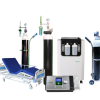
One honest note. Linde Bangladesh operates a medical oxygen sales and rental facility inside oxygen cylinder rent in Bashundhara R/A, near Evercare Hospital. If you specifically want to deal with Linde directly, that option is on your doorstep and we would rather you knew. Where we tend to be more useful is the surrounding setup — the concentrator, the hospital bed, the air mattress, the oximeter and the backup cylinder as one coordinated arrangement, at published prices, with someone answering the phone at 3 AM.
বসুন্ধরা আবাসিক এলাকায় অক্সিজেন সিলিন্ডার ভাড়া
বসুন্ধরা আবাসিক এলাকা (Bashundhara R/A), নদ্দা, নতুন বাজার, কুড়িল, ভাটারা কিংবা বারিধারায় দীর্ঘমেয়াদি রোগীর জন্য অক্সিজেনের ব্যবস্থা করতে হলে আগে থেকে পরিকল্পনা করাই সবচেয়ে ভালো।
ভাড়ার রেট:
| প্যাকেজ | চায়না / ইসলাম | লিন্ডে (BOC) |
|---|---|---|
| ১ দিন | ৳৪০০ | ৳৫০০ |
| ৭ দিন | ৳২,৫০০ | ৳৩,০০০ |
| ১০ দিন | ৳৩,০০০ | ৳৩,৫০০ |
| ১৫ দিন | ৳৩,৫০০ | ৳৪,০০০ |
| ৩০ দিন | ৳৪,৫০০ | ৳৫,০০০ |
দীর্ঘমেয়াদি রোগীর জন্য সবচেয়ে জরুরি পরামর্শ:
কয়েক মাস ধরে অক্সিজেন লাগলে অক্সিজেন কনসেনট্রেটর নেওয়াই ভালো — এটি বাতাস থেকে অক্সিজেন তৈরি করে, বারবার রিফিল করতে হয় না।
কিন্তু কনসেনট্রেটর চলে বিদ্যুতে। তাই একটি ভরা সিলিন্ডার সবসময় ব্যাকআপ হিসেবে রাখুন। বিদ্যুৎ চলে গেলে সাথে সাথে সিলিন্ডারে রোগীকে দিন, তারপর অন্য কিছু দেখুন।
ঠিকানা দেওয়ার সময় খেয়াল রাখুন: বসুন্ধরা আবাসিক এলাকা আর পান্থপথের বসুন্ধরা সিটি এক নয়। ঠিকানায় অবশ্যই ব্লক নম্বর ও রোড নম্বর দুটোই লিখুন, আর গেটে আগেই জানিয়ে রাখুন যেন ডেলিভারি ঢুকতে সমস্যা না হয়।
রিফিল: দোকানে ৳৫০০, বাসায় ডেলিভারি ৳৮০০ (লিন্ডে ৳৯০০)।
কল করুন: ০১৮১১১২২৬৯৮
Building the Room, Stage by Stage
Long-term care rarely needs everything on day one. Adding equipment as the situation demands avoids both overspending and scrambling.
Stage one — oxygen is the only requirement. A cylinder or concentrator, flow meter, cannula or mask, and a pulse oximeter. That is genuinely all. Resist buying more until you know how the situation develops.
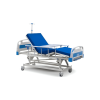
Stage two — the patient’s mobility drops. A hospital bed becomes the significant upgrade, because it lets one person reposition a patient safely without injuring their own back. Adjustable height and backrest change daily care completely. Add an anti-bedsore air mattress at the same time if the patient is spending most of the day in bed — pressure sores are far easier to prevent than to treat.
Stage three — secretions become an issue. A suction machine, common with stroke patients, advanced neurological conditions and some late-stage illnesses. Ask the treating doctor whether it is likely to be needed before you need it urgently.
Stage four — breathing support beyond oxygen. CPAP or BiPAP, always on a specialist’s instruction and never bought speculatively. These treat different problems from oxygen therapy and are prescribed, not chosen.
Throughout, keep monitoring simple. A pulse oximeter and a written daily record. A patient monitor is worth having only where a doctor has asked for continuous observation; for most home patients it produces more anxiety than information.
Buy or rent at each stage as it arrives. We supply all of it, so you can add one item at a time without starting a new supplier relationship each time.
If a Hired Attendant Will Be Running the Equipment
Many Bashundhara households engage a full-time or shift attendant for long-term care. That works well, provided a few things are handled deliberately.
Have the attendant present at handover. Whoever will physically operate the equipment should watch the demonstration, not receive it second-hand from a family member who watched it once while distracted.
Confirm they can read the gauge and set the flow meter. Ask them to demonstrate it back rather than asking whether they understood. This is not about doubting anyone’s competence — it is standard practice for anything that matters, and any good attendant will appreciate it.
Put the numbers in writing, in Bengali. Prescribed flow rate, saturation target, the doctor’s red line, doctor’s number, family contact, our hotline. Stuck to the wall by the bed, not stored in someone’s phone.
Be explicit about what the attendant must not do. Never change the flow rate. Never move the cylinder without help. Never allow a flame, candle or cigarette in the room. State these as rules, not suggestions.
Agree who orders refills, and make sure they can reach us. If the attendant will call, give them the number and tell us their name. Care fails at handover points more often than at any other moment.
Keep the daily record going across shifts. A shared sheet means the night attendant sees what the day attendant saw. Without it, nobody sees the trend — and the trend is the useful part.
Cylinders and Concentrators Over Six Months
For a long horizon, the arithmetic matters. A worked example for a patient on a moderate daily requirement:
Cylinders alone. Six months of monthly rental at ৳4,500 comes to ৳27,000, before a single refill. Add refills at ৳500 to ৳800 each and the total climbs steeply depending on daily hours. You are also managing a delivery or a collection every few days, indefinitely.
Buying a cylinder outright. ৳8,000 for a China unit removes the rental line entirely, leaving only refills. Sensible if usage is intermittent — a few hours a night, or symptom-driven use during flare-ups.
A concentrator plus one backup cylinder. No refills at all for the concentrator, no collections, no gauge-watching. Your ongoing cost is electricity, and the backup cylinder needs topping up only occasionally. For continuous or near-continuous therapy over months, this is almost always both cheaper and calmer.
The threshold is roughly this: beyond about two months of daily use, a concentrator with a cylinder backup usually wins on both cost and sanity. Below that, renting or buying a cylinder is simpler.
Tell us the prescribed flow rate, the daily hours and the expected duration, and we will work the numbers with you rather than guessing at them.
Safety Points Specific to Modern Flats
Standard oxygen precautions apply everywhere — three metres from any flame, cylinder secured upright, no oil or petroleum jelly near the valve or the patient’s nose, no smoking indoors. Two additional points matter in the kind of housing Bashundhara has.
Air-conditioned rooms are sealed rooms. A closed, air-conditioned bedroom running oxygen for hours allows oxygen to accumulate in the air, which raises the fire risk for everything else in the room — bedding, curtains, upholstery. Air conditioning is fine; simply ensure the room gets fresh air periodically rather than staying sealed for twelve hours straight.
Watch what sits near the concentrator. A concentrator needs clear air around its intake. Pushed against a wall, tucked behind a curtain or boxed into a corner, it works harder, runs hotter and eventually underperforms. Give it clearance on all sides and keep its filters clean per the manufacturer’s instructions.
Extension cords and power strips deserve attention. A concentrator should ideally run from a wall socket rather than a daisy-chained multi-plug shared with a television and three chargers. This is ordinary electrical sense, but it is routinely overlooked in a room that has been rearranged around a patient.
Keep the room walkable at night. Tubing, cables and equipment accumulate over months. Walk the route from the door to the bed in the dark yourself, once, and fix whatever you trip on.
Mistakes That Show Up in Long Care
No backup for the concentrator. The most consequential omission in long-term home oxygen, and the reason this page opens where it does.
Buying the whole setup on day one. Families sometimes purchase bed, mattress, suction machine and monitor immediately, and half of it goes unused. Add equipment as needs arrive.
Nobody checking the backup cylinder for months. Put it in a monthly routine with a fixed date.
Letting the daily record lapse after the first fortnight. Enthusiasm fades; the record is most valuable in month three, when a slow trend is emerging that nobody would notice from memory.
Assuming the building generator covers the flat. Verify it. Do not discover the answer during an outage.
Never revisiting the prescription. Requirements change over months. A patient’s flow rate should be reviewed by their doctor periodically, not set once and followed for a year.
What We Bring to a Long-Term Setup
Published prices that stay published. The tables above are the counter price, on day one and in month six.
Accessories included with rentals — flow meter, regulator, mask and demonstration, not itemised separately.
A deposit that comes back, stated exactly before you travel.
Terms disclosed before payment. Self-collection and self-return, said openly.
Genuine cylinders. China, Islam and Linde (BOC), properly marked.
One supplier across the whole arc of care — oxygen cylinders and concentrators, hospital beds, anti-bedsore air mattresses, suction machines, nebulizers, wheelchairs, pulse oximeters, patient monitors, CPAP and BiPAP. Long-term care grows in stages, and each stage should not mean a new relationship.
Someone reachable at any hour, with bKash, Nagad, cards and cash on delivery where applicable.
Frequently Asked Questions
Should I rent a cylinder or get a concentrator for my father’s long-term care? If he needs oxygen most of the day for months, take the concentrator and keep one filled cylinder as backup. If he uses it a few hours a night, a cylinder is simpler and cheaper. Tell us the flow rate and daily hours and we will give you a specific answer instead of a general one.
Will a concentrator run on my building’s generator? Ask your building management whether the backup supply reaches sockets inside the flat or only common areas — this varies between buildings. Either way, keep a filled cylinder as backup. Generators fail too.
How often should the backup cylinder be refilled if we never use it? Check the gauge monthly on a fixed date. Top it up whenever pressure has dropped meaningfully. A backup you have not verified is not a backup.
বিদ্যুৎ চলে গেলে কনসেনট্রেটর বন্ধ হয়ে গেলে কী করব? সাথে সাথে রোগীকে ব্যাকআপ সিলিন্ডারে দিন — ভালভ খুলে ডাক্তারের বলে দেওয়া ফ্লো রেট সেট করুন। তারপর বিদ্যুতের বিষয়টি দেখুন। এজন্যই সবসময় একটি ভরা সিলিন্ডার হাতে রাখা জরুরি।
ঠিকানা দেওয়ার সময় কী কী লিখতে হবে? ব্লক নম্বর, রোড নম্বর, বাসা বা প্লট নম্বর, বিল্ডিংয়ের নাম, ফ্লোর ও ফ্ল্যাট নম্বর — সবগুলো একসাথে লিখুন। আর অবশ্যই “বসুন্ধরা আবাসিক এলাকা” লিখবেন, শুধু “বসুন্ধরা” নয়।
Do you deliver inside Bashundhara R/A, given the gate security? Yes. Please inform your building security or the estate gate that a medical equipment delivery is expected, with the name and number. That single call prevents most delays at the gate.
Can I rent a concentrator instead of buying one? Yes, we rent and sell 5L and 10L units. Renting suits an uncertain duration; buying makes sense once it is clear therapy will continue for many months.
What documents do you need? A copy of the National ID, plus the doctor’s prescription for ongoing therapy. For urgent short-term use, ID verification is usually sufficient.
My mother needs a hospital bed as well. Can it all come together? Yes, and it is worth arranging together rather than in pieces. Tell us what the doctor has advised and we will quote bed, mattress, oxygen and monitoring as one set.
Is Linde oxygen better for a long-term patient? The gas is medical grade across all three brands we supply. Linde costs more for brand assurance and build. For long-term care the more consequential decision is cylinder versus concentrator, not which cylinder brand you choose.
What happens to the equipment when care is no longer needed? Rented items come back to us and the deposit is refunded. For purchased equipment, keep it if a recurrence is plausible, or ask us about options. Families sometimes pass equipment to a relative or a local charitable clinic; we are happy to advise on servicing before it changes hands.
Do you cover Nadda, Vatara and Notun Bazar too? Yes, along with Kuril, Baridhara, Jagannathpur, Khilkhet and the 300 Feet Road side, plus the rest of Dhaka.
Plan It Once, Properly
Long-term home care rewards preparation in a way that short emergencies do not. The families who manage it best in Bashundhara are the ones who set up the whole system deliberately — primary supply, backup supply, monitoring, and a written plan for the night the power fails.
Call us with the prescription, the expected duration and your block number. We will tell you what the setup should look like, what each part costs, and what you can safely leave until later.
Hotline (24/7): +8801811122698 WhatsApp: wa.me/+8801811122698 Store: Mirpur-2, Block A, Road 5, House 12, Dhaka, 1216
দীর্ঘমেয়াদি অক্সিজেন ব্যবস্থার পরামর্শ নিতে কল করুন — ০১৮১১১২২৬৯৮