
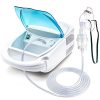
Oxygen Concentrator Price in Bangladesh 2026: Complete Buying Guide with Latest Price List
Oxygen Concentrator Price List in Bangladesh (BD) — 2026
| Model Name | Price |
|---|---|
| Longfian JAY-5 (5L) Oxygen Concentrator | ৳ 35,000 – 40,000 |
| Owgels 5L Oxygen Concentrator | ৳ 36,800 – 42,000 |
| Yuwell 7F-5 / 8F-5 (5L) Oxygen Concentrator | ৳ 39,700 – 45,000 |
| Folee / Dynmed 5L Oxygen Concentrator | ৳ 35,000 – 42,000 |
| Philips EverFlo 5L Oxygen Concentrator | ৳ 65,000 – 78,000 |
| Longfian JAY-10 (10L) Oxygen Concentrator | ৳ 60,000 – 65,000 |
| Owgels 10L Oxygen Concentrator | ৳ 62,000 – 68,000 |
| DeVilbiss 10L Oxygen Concentrator | ৳ 85,000 – 1,00,000 |
| Portable Oxygen Concentrator (battery-powered) | ৳ 85,000 – 2,00,000 |
| Used / Refurbished 5L Concentrator | ৳ 20,000 – 30,000 |
| Humidifier Bottle (spare) | ৳ 300 – 800 |
| Nasal Cannula / Mask (spare) | ৳ 100 – 500 |
Introduction
Here’s a scenario we see every week: a family gets a doctor’s advice that their patient needs continuous oxygen at home, opens Google, types “oxygen concentrator price in Bangladesh” — and immediately drowns in numbers ranging from ৳20,000 to ৳2,00,000. Same-looking white machines. Wildly different prices. Which one is honest? Which one will still be running two years from now?
This guide answers exactly that. As one of the trusted medical equipment suppliers in Bangladesh, Medical Product BD imports, sells, rents, services, and repairs oxygen concentrators daily — so we know precisely why a Philips EverFlo costs nearly double a generic 5L unit, when a 10 liter oxygen concentrator is worth the extra money, and when renting beats buying entirely.
By the end, you’ll know the real 2026 price ranges, what drives them, which brand fits which patient, and how to avoid the two most expensive mistakes buyers make. Let’s clear the fog.
Quick Answer (Featured Snippet)
The oxygen concentrator price in Bangladesh in 2026 ranges from ৳35,000 to ৳2,00,000. Standard 5-liter home models cost ৳35,000–45,000, premium brands like Philips EverFlo cost ৳65,000–78,000, 10-liter machines cost ৳60,000–1,00,000, and battery-powered portable concentrators start around ৳85,000.
Key Takeaways
- Budget ৳35,000–45,000 for a dependable 5L concentrator; ৳60,000+ for 10L; ৳85,000+ for portable.
- The prescribed flow rate (LPM) — not the price tag — should drive your choice. Buy the capacity your doctor prescribes, with a little headroom.
- Oxygen purity of 90–96% is standard; verify the machine holds purity at its maximum flow, not just at 1 LPM.
- Premium brands (Philips, DeVilbiss) cost more upfront but typically run quieter, last longer, and hold resale value.
- Electricity matters: a 5L unit draws roughly 300–350 watts — plan for backup power, and keep an oxygen cylinder for load-shedding.
- Renting (from daily to monthly plans) is smarter than buying for recoveries expected to last under 3–4 months.
- Always buy from a supplier offering warranty, spare filters, and servicing — a concentrator without after-sales support is a gamble.
- Medical Product BD delivers, installs, and demonstrates every concentrator across Dhaka and all 64 districts, with 24/7 support.
What Is an Oxygen Concentrator?
An oxygen concentrator is an electric medical device that manufactures its own oxygen — no tank, no refills. Using a process called Pressure Swing Adsorption (PSA), it pulls in ordinary room air (about 21% oxygen), forces it through zeolite sieve beds that trap nitrogen, and delivers 90–96% concentrated oxygen through a nasal cannula or mask. Plug it in, and it produces medical-grade oxygen continuously, hour after hour, day after day.
That “never runs empty” quality is why doctors recommend concentrators for long-term oxygen therapy — patients with COPD, pulmonary fibrosis, or chronic heart and lung conditions who need oxygen 15+ hours daily. Two main formats exist:
- Stationary (home) concentrators — 5L or 10L capacity, mains-powered, built for continuous bedside use.
- Portable oxygen concentrators — lightweight, battery-powered units for travel and active patients, usually delivering pulse-dose oxygen.
Why the Right Concentrator Matters More Than the Cheapest Price
A concentrator is not a rice cooker. It’s a machine your patient may depend on for every breath, running 20+ hours a day in Dhaka heat and humidity. Choose poorly and the cost shows up later: purity that quietly drops below therapeutic levels, compressors that fail in year two, and no-name brands with zero spare parts in Bangladesh.
Health authorities including the WHO classify medical oxygen as an essential medicine, and guidance from the NHS and Mayo Clinic on long-term oxygen therapy stresses one theme: consistent, correctly-dosed oxygen is what improves survival and quality of life for chronic respiratory patients. Consistency requires a machine that keeps its promises. That’s why this guide focuses on value — the intersection of fair price, proven reliability, and real after-sales support — rather than the lowest sticker number.
Who Needs an Oxygen Concentrator?
Doctors commonly prescribe home concentrators for:
- COPD patients on long-term oxygen therapy (the largest user group in Bangladesh)
- Pulmonary fibrosis and interstitial lung disease patients
- Chronic asthma cases with recurring low saturation
- Post-pneumonia and post-COVID patients with lingering oxygen needs
- Heart failure patients whose doctors advise supplemental oxygen
- Elderly patients with combined cardio-respiratory weakness
- Home ICU setups, alongside patient monitors, suction machines, and hospital beds
- Sleep-disorder patients whose CPAP or BiPAP therapy is supplemented with oxygen
If the prescription says oxygen for months, a concentrator almost always beats cylinders on running cost. If it says days or weeks, skip ahead to the rent-vs-buy section.
Signs It’s Time to Get One
Watch for these signals — then confirm with a doctor before purchasing:
- Pulse oximeter readings repeatedly below 92–95% SpO₂ at rest
- Breathlessness while talking, eating, or walking short distances
- The patient is currently using 2+ oxygen cylinders per week (refill costs now exceed concentrator running costs)
- Doctor has prescribed oxygen for 15 or more hours per day
- Nighttime desaturation — morning headaches, restless sleep, daytime drowsiness
- Frequent hospital readmissions for low oxygen
A concentrator is prescribed equipment. The doctor sets the LPM; the machine simply has to deliver it reliably.
What Decides the Oxygen Concentrator Price in Bangladesh?
Six factors explain almost every taka of difference between a ৳35,000 and a ৳1,50,000 machine:
1. Flow capacity (5L vs 10L)
A 5 liter oxygen concentrator delivers up to 5 LPM; a 10 liter oxygen concentrator delivers up to 10 LPM and can even support two patients with a dual-flow kit. Doubling capacity means a bigger compressor and larger sieve beds — expect a 50–70% price jump.
2. Brand and build quality
Philips Respironics and DeVilbiss machines use premium compressors rated for tens of thousands of running hours. Chinese brands like Owgels, Yuwell, Longfian, and Folee offer excellent value and dominate the ৳35,000–45,000 segment — genuinely good machines, though typically louder and with shorter compressor lifespans than the premium tier.
3. Oxygen purity and stability
Most machines advertise 93% ± 3% purity. Premium units hold that purity at maximum flow around the clock; cheaper units may dip as flow rises. Some clinical-grade models such as the DeVilbiss 10L reach up to 96%.
4. Portability
Battery-powered portable oxygen concentrators pack the same technology into 2–3 kg with rechargeable batteries — engineering that pushes prices to ৳85,000–2,00,000.
5. Features
Digital purity displays, low-purity alarms, timer functions, remote controls, quieter operation (under 45 dB), and built-in nebulizer ports all nudge the price upward.
6. Warranty and after-sales support
A machine with a 1–3 year warranty, available filters, and a local service network justifiably costs more than a grey-import with none. This factor is invisible on day one and priceless in year two.
5 Liter vs 10 Liter: Which Capacity Should You Buy?
| Factor | 5L Concentrator | 10L Concentrator |
|---|---|---|
| Max flow | 5 LPM | 10 LPM |
| Typical price (BD) | ৳35,000–78,000 | ৳60,000–1,00,000 |
| Power draw | ~300–350 W | ~550–650 W |
| Best for | Most home patients (1–5 LPM prescriptions) | High-flow patients, home ICU, two-patient use |
| Noise | Moderate | Slightly higher |
| Monthly electricity (24/7 use, approx.) | ৳1,800–2,500 | ৳3,500–4,500 |
Rule of thumb: buy the capacity that covers your prescribed flow plus headroom. A patient prescribed 4–5 LPM should seriously consider a 10L machine, because running any concentrator constantly at its maximum strains the compressor and can reduce purity. A patient on 2 LPM is perfectly served by a quality 5L unit.
Brand-by-Brand Price Comparison
Philips EverFlo (৳65,000–78,000)
The gold standard for home use — famously quiet (around 40 dB), compact, energy-efficient, and durable. If the patient will use oxygen for years, the EverFlo’s reliability usually repays its premium.
Owgels (৳36,800–68,000)
Arguably the best-selling value brand in Bangladesh. Solid purity, digital displays on most models, and wide parts availability. The 5L is a household favourite; the 10L serves higher-flow needs affordably.
Yuwell (৳39,700–45,000)
A major Chinese medical manufacturer with dependable 5L machines, clear alarms, and good humidifier systems. A safe mid-budget pick.
Longfian (৳35,000–65,000)
Workhorse machines (JAY-5, JAY-10) widely used in clinics and homes across Bangladesh. Among the most affordable routes to a genuine 10 LPM capability.
DeVilbiss (৳85,000–1,00,000)
American-engineered, clinical-grade units with up to 96% purity and advanced monitoring — often chosen for home ICU setups and institutional buyers.
Used/Refurbished units (৳20,000–30,000)
Tempting, but risky: unknown compressor hours, no warranty, possibly degraded sieve beds. If budget forces this route, buy only from a supplier who bench-tests purity in front of you and offers at least a short service guarantee.
Buy vs Rent: The Smart Money Question
Not every patient should buy. Here’s the honest math:
| Situation | Better Option | Why |
|---|---|---|
| Recovery expected in 1–3 months (post-surgery, pneumonia) | Rent | Monthly oxygen concentrator rental costs a fraction of the purchase price, with maintenance included |
| Long-term therapy (6+ months, COPD, fibrosis) | Buy | Rental fees would exceed the machine’s price within months |
| Uncertain prognosis | Rent first, buy later | Trial the exact model at home; upgrade to purchase when the picture is clear |
| Emergency-only backup | Neither — keep a cylinder | A cylinder needs no electricity and stores indefinitely |
Medical Product BD offers daily, weekly, and monthly rental plans on 5L and 10L machines, delivered and installed the same day in most Dhaka areas — we recently set up rentals in Mirpur 10 and Banasree Block B within four hours of the call. Rental payments can often be adjusted against a later purchase. Ask our team about current terms.
How to Buy from Medical Product BD (Step-by-Step)
- Share the prescription. Call, WhatsApp, or order at medicalproductbd.com. Tell us the prescribed LPM and hours per day.
- Get a matched recommendation. Our advisor shortlists 2–3 machines across budget tiers — never just the most expensive one.
- Confirm price and payment. Transparent quote including humidifier bottle, cannula, and spare filter. EMI options available on select models.
- Same-day delivery in Dhaka. Nationwide courier reaches every district, from Chattogram to Rangpur.
- Installation and demonstration. Our technician sets up the machine, verifies purity and flow, and trains your caregivers hands-on.
- After-sales for life. Warranty processing, filter replacement, servicing, and 24/7 emergency support — one number handles it all.
Care Plan: Keeping Your Concentrator Healthy
A concentrator rewards simple, regular care with years of service:
Daily: Refill the humidifier with distilled or cooled boiled water; check that airflow feels steady; keep the machine 15–30 cm clear of walls and curtains for ventilation.
Weekly: Remove and rinse the gross particle filter (the foam pad), air-dry fully before refitting; wipe the cabinet; wash the humidifier bottle with warm soapy water.
Monthly: Inspect tubing and cannula for cracks; replace the cannula every 2–4 weeks; listen for new rattles or a change in compressor sound.
Every 6–12 months: Professional servicing — internal filter replacement, purity testing with an oxygen analyzer, and compressor health check. Medical Product BD’s maintenance team performs this at your home.
Power protection: Run the machine through a quality voltage stabilizer. In load-shedding-prone areas, pair it with an IPS or keep a filled oxygen cylinder as backup — a concentrator without electricity delivers nothing.
Safety Tips for Daily Use
- Keep the concentrator — and the patient wearing oxygen — at least 2 metres from open flames, stoves, and mosquito coils.
- Enforce a strict no-smoking rule in the oxygen room.
- Never use oil, grease, or petroleum-based products on or near the machine and cannula.
- Don’t block the air intake — no towels over the machine, no pushing it flush against furniture.
- Use the doctor-prescribed flow only; never self-adjust upward.
- Plug directly into a wall socket or stabilizer — avoid flimsy multi-plugs shared with heavy appliances.
- Place the unit on a hard, level floor in a dust-light, ventilated room.
- Keep a working pulse oximeter and log SpO₂ twice daily.
- If the low-purity alarm sounds or oxygen feels weak, switch to your backup cylinder and call for service — don’t keep the patient on a failing machine.
- Keep emergency numbers — doctor, ambulance, and your 24-hour supplier — beside the machine.
Common Buying Mistakes
Buying on price alone. The ৳20,000 mystery-brand machine with no local spare parts becomes the most expensive machine you ever owned the day its compressor fails.
Ignoring the prescription. Buying a 5L machine for a patient prescribed 6 LPM guarantees under-treatment. Match capacity to prescription first, budget second.
Forgetting electricity costs and backup. A 24/7 concentrator adds a real amount to the monthly bill and stops instantly during load-shedding. Budget for a stabilizer and a backup cylinder from day one.
Skipping the purity check. Insist the seller demonstrates purity (with an analyzer) at your prescribed flow before you pay.
Buying without warranty or service access. Filters, sieve beds, and compressors are consumables over a machine’s life. No service network = disposable machine.
Assuming portable is always better. Portable units mostly deliver pulse-dose oxygen, which isn’t suitable for every patient — especially those needing continuous flow during sleep. Confirm with the doctor before paying the portability premium.
Professional Advice
Respiratory therapists and guidance from bodies like the CDC and NHS converge on a few practical rules for concentrator users in a setting like Bangladesh:
- Treat flow rate as a dose. Too little under-treats; too much can harm COPD patients. The dial belongs to the doctor.
- Complete the prescribed hours. Long-term oxygen therapy shows its survival benefit at 15+ hours daily — an interrupted supply undermines the whole treatment, which is why backup planning is a medical issue, not a convenience issue.
- Monitor with data. A simple pulse oximeter log transforms follow-up appointments. Note readings at rest and after mild activity.
- Service before failure. Purity loss is silent — the machine sounds normal while delivering less oxygen. Annual analyzer testing catches it.
- Involve the whole household. Every adult at home should know how to switch the patient to the backup cylinder in under two minutes.
Conclusion
The oxygen concentrator price in Bangladesh in 2026 spans roughly ৳35,000 for dependable 5-liter value brands to ৳2,00,000 for premium portables — and the right choice depends on three things only: the prescribed flow rate, the expected duration of therapy, and the after-sales support behind the machine. Get those three right, and any budget tier can serve your patient well.
Medical Product BD stocks the full range — Philips, Owgels, Yuwell, Longfian, DeVilbiss — with transparent pricing, rentals, same-day Dhaka delivery, nationwide coverage, and technicians who won’t leave until your family can operate the machine confidently. Whether you’re in Wari or anywhere else in Bangladesh, quality oxygen support is one phone call away.
COMPARISON TABLES
(Two tables appear in the article: “5L vs 10L” and “Buy vs Rent”. Additional summary table below.)
Price Tier Summary — Oxygen Concentrators in Bangladesh (2026)
| Tier | Price Range | Typical Models | Best For |
|---|---|---|---|
| Budget 5L | ৳35,000–42,000 | Longfian JAY-5, Folee, Dynmed | Cost-conscious long-term home use |
| Mid-range 5L | ৳39,700–45,000 | Yuwell, Owgels 5L | Balance of price, features, parts availability |
| Premium 5L | ৳65,000–78,000 | Philips EverFlo | Quietest, most durable daily-use machine |
| 10L class | ৳60,000–1,00,000 | Longfian JAY-10, Owgels 10L, DeVilbiss | High-flow prescriptions, home ICU, dual patient |
| Portable | ৳85,000–2,00,000 | Battery-powered pulse-dose units | Travel and mobile lifestyles |
| Refurbished | ৳20,000–30,000 | Various | Tight budgets (verify purity + guarantee) |
BENEFITS (of Buying Your Concentrator from Medical Product BD)
- Unlimited oxygen production — no refills, no running out at 3 AM
- Dramatically lower running cost than cylinder refills for long-term therapy
- Genuine machines from authorized import channels — no grey-market surprises
- Full range in one place: budget 5L to clinical-grade 10L and portables
- Honest, prescription-matched recommendations instead of upselling
- Transparent pricing with EMI options on select models
- Same-day delivery across Dhaka and courier service to all 64 districts
- Free professional installation with purity and flow verification
- Hands-on caregiver training with every machine
- Warranty support processed locally — no shipping machines abroad
- Spare filters, cannulas, and humidifier bottles always in stock
- Annual servicing and oxygen purity testing at your home
- Flexible rental plans (daily to long-term) with rent-to-buy adjustment
- Backup oxygen cylinder bundles for load-shedding protection
- Safer therapy: alarms, stable purity, and guidance reduce patient risk
- Quieter home environment with modern low-decibel models
- 24/7 emergency support line for troubleshooting and urgent needs
- Trade-in guidance and honest resale advice when needs change
FEATURES (What Modern Concentrators Offer)
- PSA (Pressure Swing Adsorption) technology with dual zeolite sieve beds
- 90–96% oxygen purity, stable across the flow range
- Adjustable flow: 0.5–5 LPM (5L models) or 1–10 LPM (10L models)
- Continuous 24/7 operation capability with thermal protection
- Digital display showing flow, purity, and cumulative running hours
- Low-purity, power-failure, and high-temperature alarms
- Built-in humidifier bottle port for moisturized oxygen delivery
- Washable gross particle filter plus internal fine filters
- Quiet operation — premium models around 40–45 dB
- Timer function for prescribed-hours therapy sessions
- Nebulizer port on select models for combined respiratory therapy
- Caster wheels for easy room-to-room movement
- Compact footprints that fit beside a bed or sofa
- Voltage-tolerant designs suited to Bangladeshi power conditions
- Energy-efficient compressors (~300–350 W on 5L units)
- Remote control on select Owgels and Yuwell models
- Dual-flow kits on 10L machines to serve two patients
- Compatible with standard nasal cannulas, masks, and tubing
PEOPLE ALSO ASK
- What is the price of an oxygen concentrator in Bangladesh? In 2026, 5-liter home models cost ৳35,000–45,000, premium brands like Philips EverFlo cost ৳65,000–78,000, 10-liter machines cost ৳60,000–1,00,000, and portable units start around ৳85,000.
- Which oxygen concentrator brand is best in Bangladesh? Philips EverFlo leads for quietness and durability; Owgels, Yuwell, and Longfian offer the best value with strong parts availability; DeVilbiss suits clinical-grade needs.
- What is the price of a 5 liter oxygen concentrator in Bangladesh? Quality 5L concentrators cost between ৳35,000 and ৳45,000 for value brands, and ৳65,000–78,000 for the Philips EverFlo.
- Is an oxygen concentrator better than an oxygen cylinder? For long-term daily therapy, yes — it never needs refills. Cylinders remain essential as backup during power cuts and for high-flow emergencies.
- How much electricity does an oxygen concentrator use in BD? A 5L unit draws roughly 300–350 watts — about ৳1,800–2,500 monthly if run 24/7. A 10L unit draws 550–650 watts.
- Can I rent an oxygen concentrator in Dhaka? Yes. Medical Product BD rents 5L and 10L concentrators on daily, weekly, and monthly plans with same-day delivery and installation.
- What oxygen purity should a concentrator provide? Look for 90% or higher — most machines deliver 93% ± 3%. Verify purity holds at the maximum flow you’ll use.
- Do oxygen concentrators work during load-shedding? No — they need continuous electricity. Pair yours with an IPS or keep a filled oxygen cylinder as backup.
- How long does an oxygen concentrator last? Quality machines run 5–8 years or 20,000–30,000 hours with regular filter changes and annual servicing.
- Can a 10 liter oxygen concentrator serve two patients? Yes — with a dual-flow kit, a 10L machine can supply two patients at up to 5 LPM each, common in home ICU and clinic settings.
FAQs
1. What is the cheapest reliable oxygen concentrator price in Bangladesh? Around ৳35,000–40,000 buys a dependable new 5L unit from Longfian, Folee, or similar value brands. Below ৳30,000 usually means used or refurbished stock — verify purity before buying.
2. Why is the Philips EverFlo so much more expensive? You pay for an ultra-quiet compressor (~40 dB), lower power draw, proven multi-year durability, and strong resale value — worthwhile for patients on oxygen for years.
3. What flow rate do most home patients need? Most home prescriptions fall between 1 and 5 LPM, which a 5L machine covers. Prescriptions of 5+ LPM call for a 10L unit.
4. Does a higher price mean higher oxygen purity? Not always. Most machines across tiers deliver ~93%. Price differences mainly reflect durability, noise, features, and brand support — though premium 10L units can reach 96%.
5. Is EMI available on oxygen concentrators? Yes, Medical Product BD offers EMI options on select models. Ask our team about current bank partners and terms.
6. How quickly can you deliver in Dhaka? Same-day delivery covers most of Dhaka; emergency deliveries often reach homes within hours. Nationwide courier serves every district.
7. What’s included with a new concentrator? The machine, humidifier bottle, nasal cannula, spare gross filter, user manual, warranty card — plus free installation and caregiver training in Dhaka.
8. How often do filters need changing? Rinse the external foam filter weekly; internal fine filters are replaced at servicing every 6–12 months depending on usage and dust levels.
9. Can I run a concentrator on an IPS during power cuts? Yes, if the IPS is sized for the machine’s wattage (300–350 W for 5L). Many families instead keep a backup oxygen cylinder — cheaper and indefinitely reliable.
10. Is a portable oxygen concentrator suitable for sleeping? Often not — most portables deliver pulse-dose oxygen triggered by inhalation, which may miss shallow sleep breathing. Ask the doctor; continuous-flow stationary units are the default for overnight use.
11. Do you buy back or exchange machines? We provide honest trade-in and resale guidance when a patient’s needs change. Contact support with your model and purchase details.
12. What warranty do concentrators carry in Bangladesh? Typically 1 year on value brands and up to 2–3 years on premium models, covering the compressor and electronics. Medical Product BD processes all warranty claims locally.
13. Can the same machine run a nebulizer? Select models include a dedicated nebulizer port. If yours doesn’t, a separate nebulizer machine is inexpensive — we stock both.
14. How noisy are these machines at night? Premium units hum at ~40–45 dB (quiet library level); value brands run ~50–60 dB. Placing the machine on a mat, slightly away from the bed, helps light sleepers.
15. How do I order from Medical Product BD? Call our 24-hour hotline, message us on WhatsApp, or order online at medicalproductbd.com. An advisor confirms the model, price, and delivery slot immediately.